
What AI Model Does Alibaba Have? Meet Qwen — Alibaba’s ChatGPT, Explained
If you searched alibaba model, the short answer is Qwen (Tongyi Qianwen) — the family of large language models built by Alibaba Cloud. It’s the closest thing Alibaba has to ChatGPT.
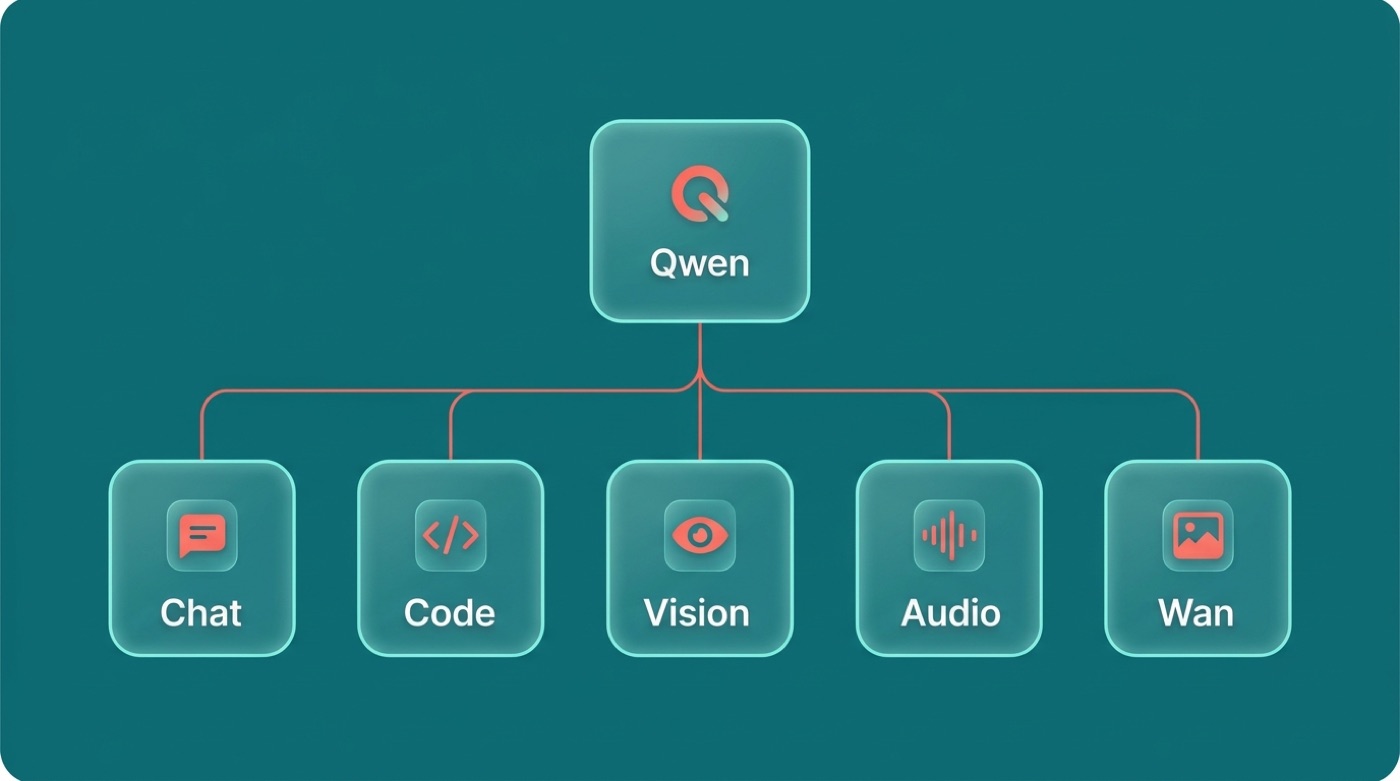
Qwen isn’t one single model, though. It’s a whole family: a general chat model, a version that can “see” images (Qwen-VL), a coding assistant (Qwen-Coder), and a separate line called Wan for pictures and video. Below, all of it explained in plain English, no developer jargon required.
What is the Alibaba model? Qwen in plain English
The name behind it: Qwen = Tongyi Qianwen
Qwen is the short, English-friendly name. The full Chinese name is 通义千问 (Tongyi Qianwen), which roughly translates to “universal truth through thousands of questions.” They’re the same thing — Qwen is just the name most people outside China use day to day.
The company behind it is Alibaba Cloud, the cloud computing arm of Alibaba Group. The first Qwen models were released in 2023, and according to Wikipedia’s entry on Qwen, the project has expanded quickly since then into a broad family of models rather than a single product.
Is this “an AI model” or many?
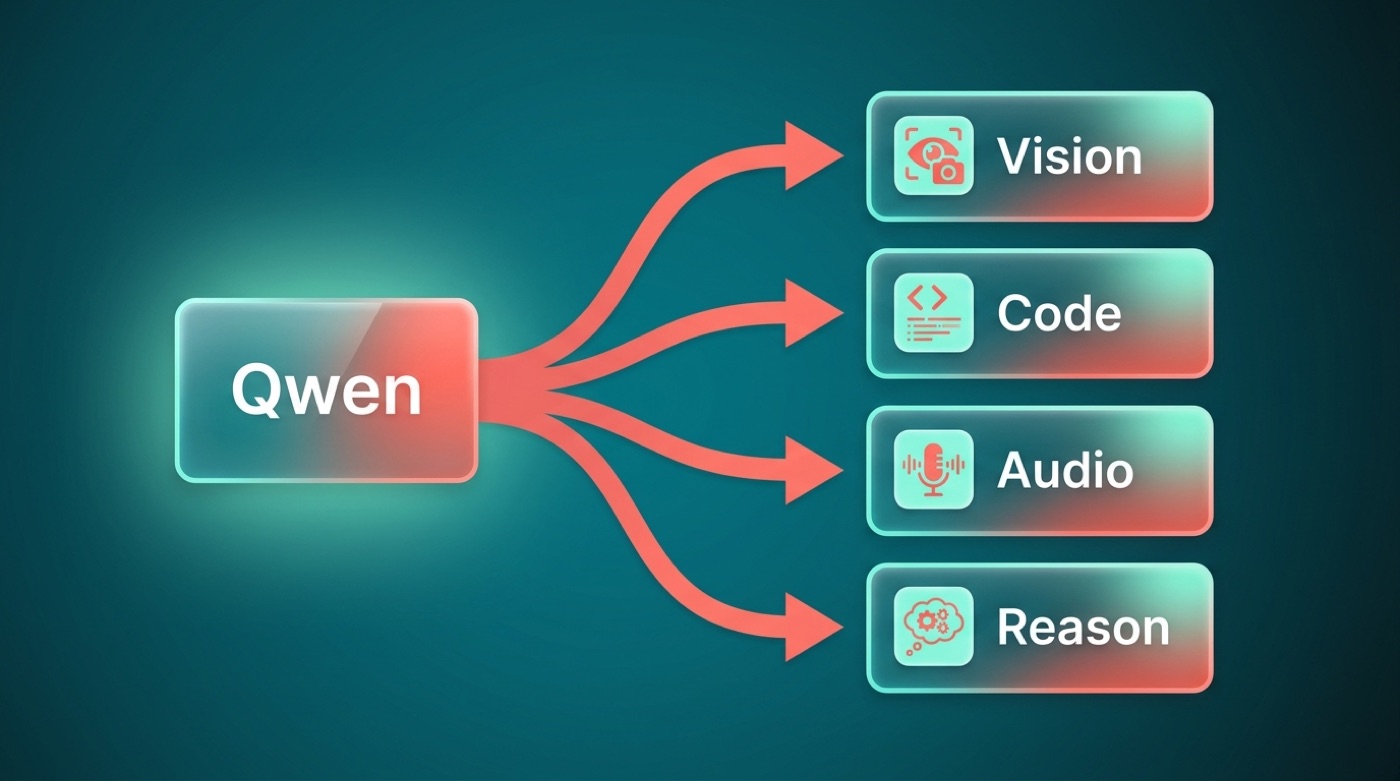
Here’s the part that trips people up: Qwen is really a family, not one model. There’s a base chat model that works a lot like ChatGPT — you type a question, it answers. But layered around that base are specialized versions built for particular jobs:
- Qwen-VL — reads images, screenshots, and photos, not just text
- Qwen-Coder — writes and explains code
- Qwen-Audio — understands speech and other sound
- QwQ — a reasoning-focused version that works through problems step by step
- Qwen-Math — tuned for math problems
Alibaba and the QwenLM team, which maintains the official Qwen blog and documentation, publish these as related but separate releases rather than one do-everything model. The table below lays out what each one is actually for.
Is there an “Alibaba ChatGPT”? Yes — and here’s what to try
Yes — the closest thing to “ChatGPT from Alibaba” is Qwen Chat, a free web chat where you can talk to the model directly in your browser at chat.qwen.ai (also reachable at qwen.ai). No installation, no coding, just a chat box. In mainland China, the same underlying model also powers the Tongyi app.
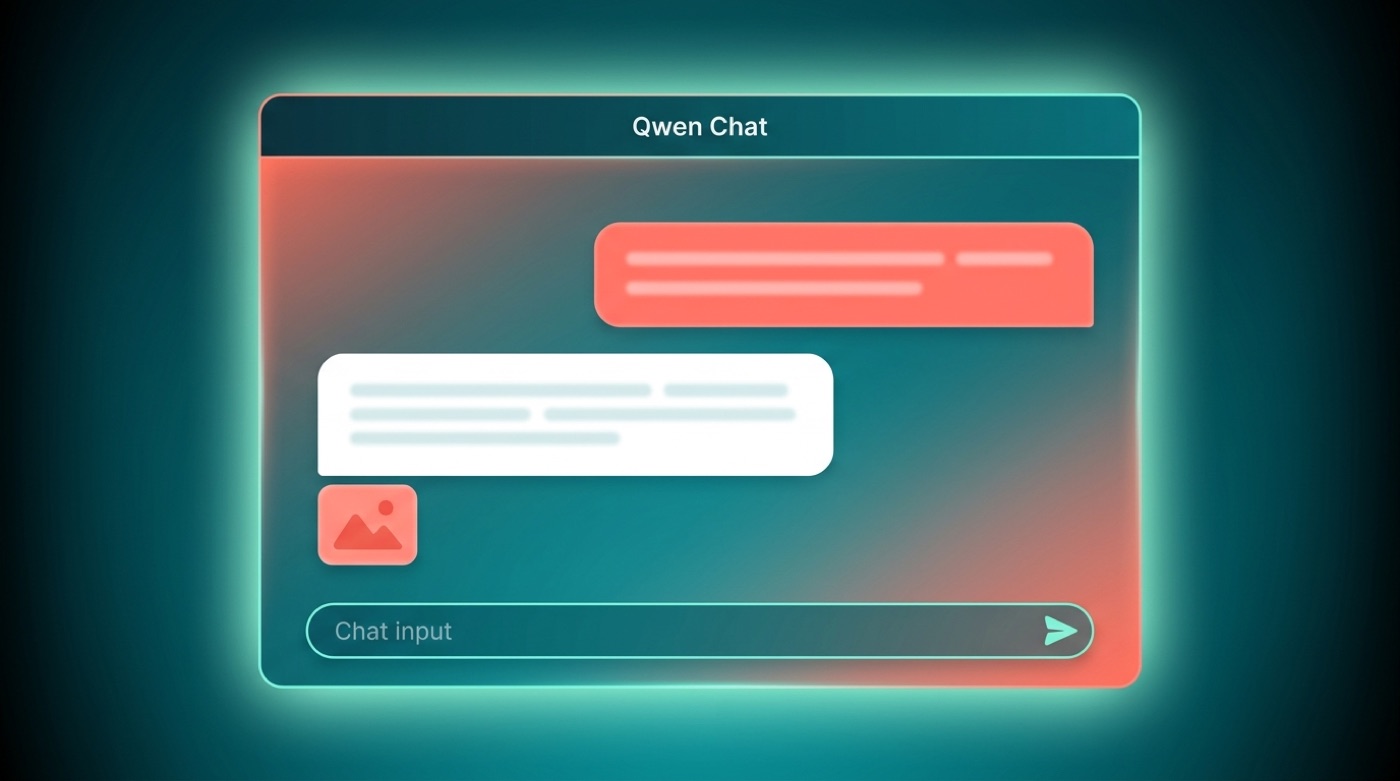
Inside Qwen Chat, a typical newcomer can:
- Ask general questions and get conversational answers, the same way you’d use ChatGPT
- Upload an image and ask about it, since the chat interface can call the vision-capable Qwen-VL model
- Paste in code and ask for an explanation or a fix
Alibaba doesn’t publish exact user counts through independent, verifiable channels, so it’s worth treating any specific numbers you see elsewhere with caution. What’s verifiable is simpler: it’s a free, browser-based way to try Alibaba’s AI without downloading anything.
The Alibaba AI family at a glance
Table: the main members of the Qwen family
| Model line | What it’s for (plain English) | Newcomer takeaway |
|---|---|---|
| Qwen (chat) | General conversation and writing | The default “talk to it like ChatGPT” model |
| Qwen-Coder | Writing and explaining code | Best pick for programming questions |
| Qwen-VL | “Sees” images — reads screenshots and photos | Use it when you need the AI to look at a picture |
| Qwen-Audio | Understands speech and sound | For voice and audio-related tasks |
| Qwen-Math | Works through math problems | Better fit than the general chat model for tricky math |
| QwQ | Step-by-step reasoning | Slower, but built to reason through harder problems |
| Wan (Tongyi Wanxiang) | Generates images and video | Alibaba’s answer to image/video generators, not text |
As with any fast-moving model family, exact capabilities and version names change over time — Alibaba and the QwenLM team are the source to check for the current lineup.
Wan: Alibaba’s image & video model
Alongside the text-focused Qwen line, Alibaba also builds Wan (通义万相, Tongyi Wanxiang) — a separate family aimed at generating images and video rather than answering questions. It’s a distinct product from Qwen chat, even though both come out of the same company.
Wan’s open releases have shown up on developer platforms rather than being locked to a single app:
- Model weights published on GitHub under Alibaba’s dedicated Wan organization
- Copies mirrored on ModelScope, Alibaba’s own model-hosting hub
- Also listed on Hugging Face under the Wan-AI organization
Exact version numbers and release dates move fast in this space, so treat Alibaba’s own GitHub and ModelScope pages as the current source of truth rather than any single article, including this one.
This is the organization of Qwen, which refers to the large language model family built by Alibaba Cloud.
Qwen on Hugging Face
Is Qwen free? Is it open-source?
Chatting costs nothing. Qwen Chat is free to open in a browser and try, the same way you’d try ChatGPT’s free tier — no payment required just to have a conversation with the model.
Downloading is free too, for many models. A large share of Qwen releases ship as open weights under the Apache 2.0 license, which means anyone can download the model files from Hugging Face or ModelScope and run them on their own hardware without paying Alibaba a licensing fee. You still need a computer capable of running the model, which for larger versions can mean serious hardware.
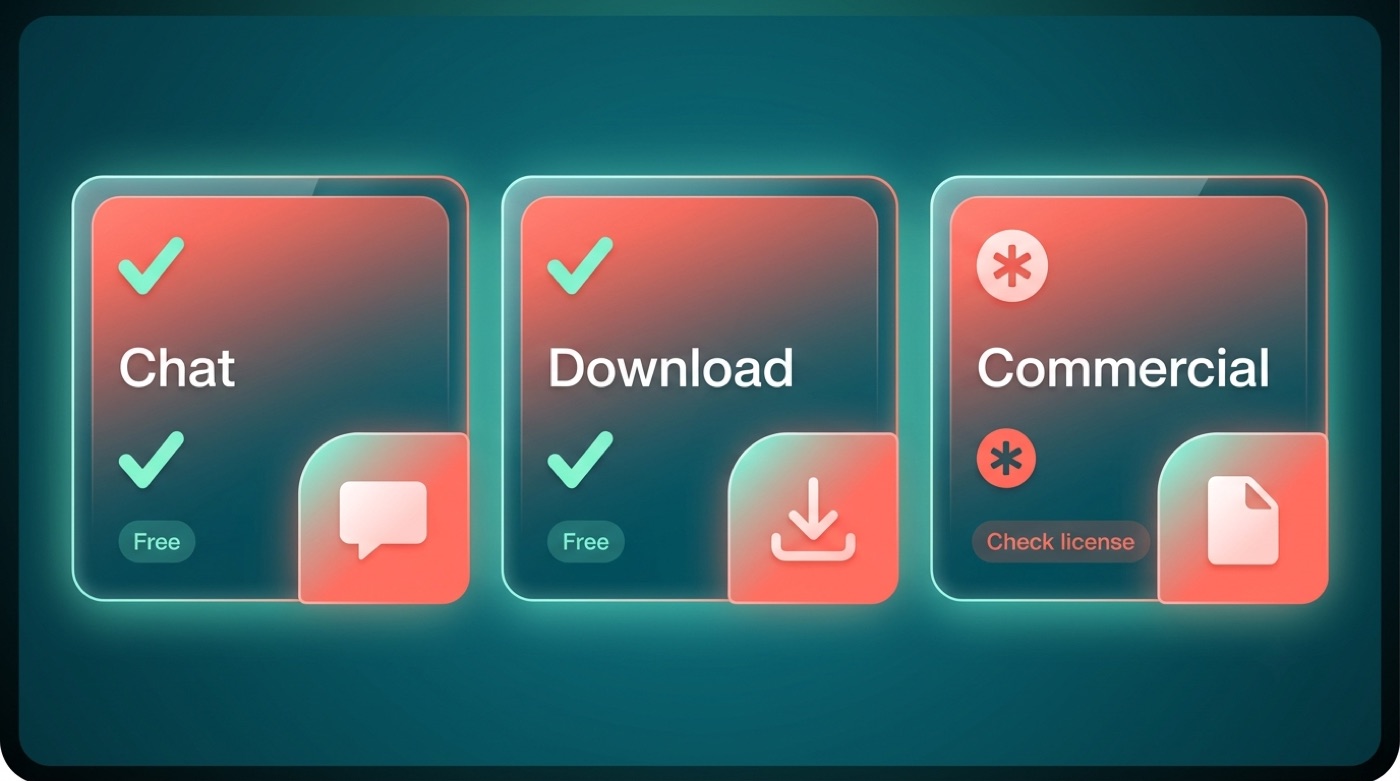
Not every model uses the same license. Some Qwen releases carry Alibaba’s own model-specific license terms rather than the fully permissive Apache 2.0 license, so it’s worth checking the license listed on the specific model’s Hugging Face or ModelScope page before assuming blanket open-source rights, especially for commercial use.
“Open weights” isn’t exactly the same as “open source”
In plain terms: “open weights” means you can download the trained model and run it yourself. Whether you’re free to modify it, redistribute it, or use it commercially depends on the license attached to that specific release — that’s a separate question from whether the weights are downloadable at all. Alibaba and the QwenLM team publish the license for each model alongside its files, so that’s the place to check rather than assuming.
Where and how to use Alibaba’s AI
There are three practical ways into the Qwen family, depending on how much technical setup you want to deal with:
- Just chat. Open Qwen Chat in a browser — no account setup beyond signing in, no download, free to start.
- Download it. Grab open-weight models from Hugging Face or ModelScope and run them locally on your own hardware.
- Build with it. Developers can call Qwen through Alibaba Cloud’s API offerings, known as DashScope or Model Studio, to plug the model into their own apps.
For most people who just want to ask questions or test what Alibaba’s AI can do, option one is the whole answer. Developers who want to integrate Qwen into a product typically start with Alibaba Cloud’s own documentation or the code and examples published on GitHub.
Qwen vs ChatGPT: how Alibaba’s AI compares
Table: Qwen vs ChatGPT (illustrative, no scores)
| Aspect | Qwen (Alibaba) | ChatGPT (OpenAI) |
|---|---|---|
| Maker | Alibaba Cloud | OpenAI |
| Open weights | Many models, yes (often Apache 2.0) | No |
| Free to try | Yes, via Qwen Chat | Yes, free tier available |
| Languages | Many; Alibaba states support for 100+ languages on newer releases (attributed claim) | Many |
| Run it yourself | Yes, download the weights and run locally | No, closed |
Neither company publishes independently audited benchmark scores that are directly comparable across every task, so this table sticks to structural differences rather than made-up numbers.
The honest takeaway
For a newcomer, both are simply “a way to talk to an AI” — the day-to-day chat experience feels similar. On the ChatGPT side that experience now runs on OpenAI’s current flagship, GPT-5.6 Sol, and Qwen’s top models are routinely weighed against the other leading closed flagships too, such as Anthropic’s Claude Fable 5. Where Qwen stands out is openness: a meaningful share of its models can be downloaded and run on your own machine for free, which those closed flagships don’t offer.
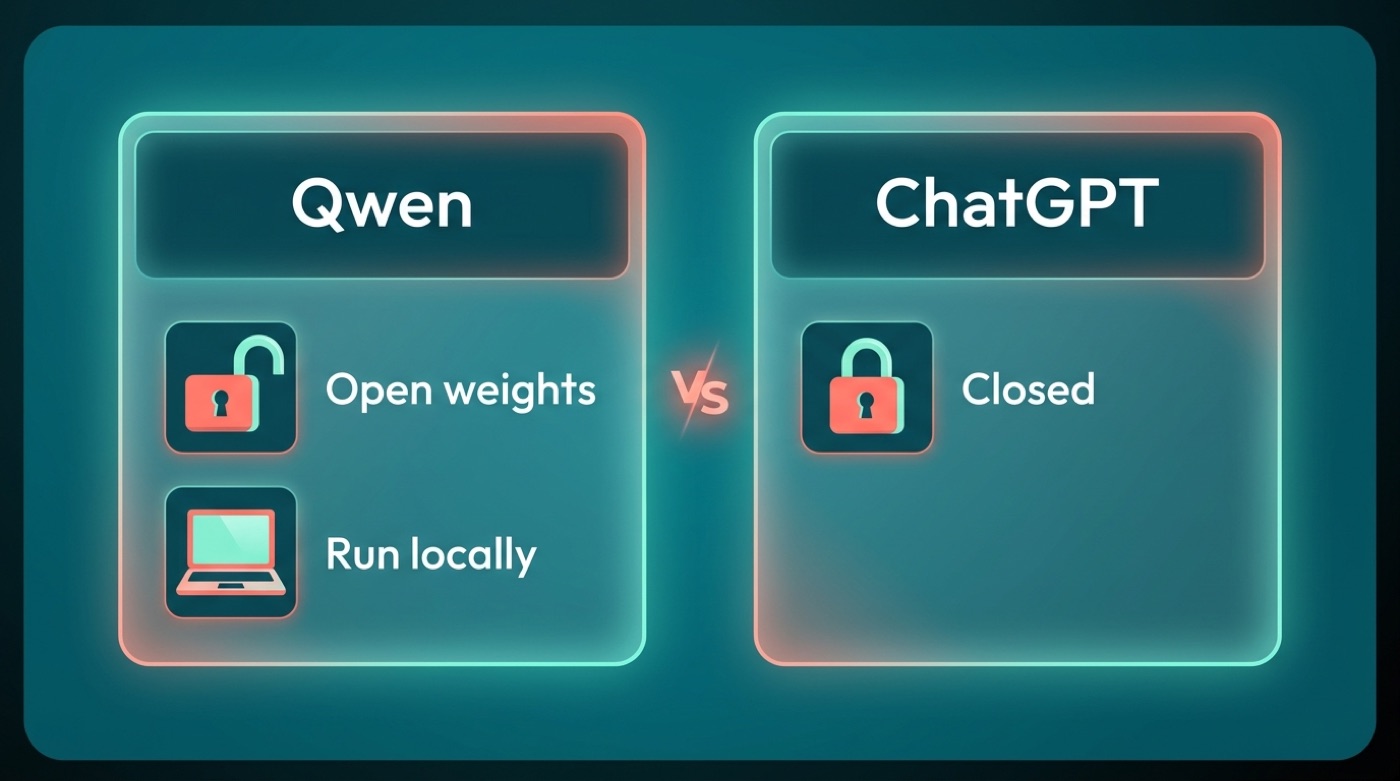
That openness makes Qwen a reasonable starting point if you:
- Want to run an AI model locally without paying per message
- Are building a product and want to self-host rather than depend on one company’s API
- Care about being able to inspect or modify the model itself, license permitting
Explore Alibaba’s AI
Dig deeper into our fact-checked, unofficial guide to Alibaba’s AI models:
- Alibaba AI — the whole line-up, simply explained
- Qwen — Alibaba’s flagship AI model in plain English
- Does Alibaba have its own ChatGPT? — Does Alibaba have its own ChatGPT?
- Tongyi Qianwen — the name behind Alibaba’s AI
- Alibaba’s AI models — the full list, plainly
- Wan — Alibaba’s AI video and image model
- Qwen vs ChatGPT — how Alibaba’s AI compares
- Is Qwen free? How to use Alibaba’s AI without paying — Is Qwen free? How to use Alibaba’s AI without paying
- How to use Qwen — where to try Alibaba’s AI
- Qwen app — Alibaba’s AI assistant app
- Alibaba’s AI image generator (Wan / Tongyi Wanxiang) — Alibaba’s AI image generator (Wan / Tongyi Wanxiang)
Frequently Asked Questions
- Does Alibaba have its own ChatGPT?
Yes. Alibaba’s answer to ChatGPT is Qwen (Chinese name Tongyi Qianwen, 通义千问), a family of AI chat models built by Alibaba Cloud. You can chat with it for free in the Qwen Chat web app at chat.qwen.ai, much like you would with ChatGPT.
- Is this the official Alibaba or Qwen website?
No. alibabamodel.pro is an independent, unofficial reference site with a free assistant. It is not affiliated with, endorsed by, or operated by Alibaba or the Qwen team. Official resources include qwenlm.github.io, github.com/QwenLM and huggingface.co/Qwen.
- What is Qwen?
Qwen is Alibaba Cloud’s flagship large language model family, first released in 2023. It has grown into a broad line-up of open-weight models across many sizes, plus specialized versions such as Qwen-Coder (for code) and Qwen-VL (which can understand images).
- Is Qwen free to use?
Yes. The Qwen Chat web app is free to use, and many Qwen models are released as open weights (a large number under the permissive Apache 2.0 license), so developers can download and run them for free from Hugging Face and Alibaba’s ModelScope. Alibaba Cloud also offers hosted, paid API access for businesses.
- Can Alibaba’s AI make images or video?
Yes. Alongside the Qwen language models, Alibaba develops Wan (Tongyi Wanxiang, 通义万相), a line of image and video generation models. Open-source Wan releases (such as Wan2.1 and Wan2.2) have been published on GitHub, ModelScope and Hugging Face.
- Where can I try Alibaba’s AI model?
The easiest way is the free Qwen Chat web app at chat.qwen.ai — no install needed. Developers can download open-weight models from Hugging Face or ModelScope, or call hosted models through Alibaba Cloud’s Model Studio (DashScope) API.