
Alibaba AI, Explained: What AI Does Alibaba Actually Have?
If you have wondered “does Alibaba have its own ChatGPT?”, the short answer is yes — Alibaba’s AI is a family of models called Qwen (Chinese name Tongyi Qianwen), built by Alibaba Cloud. Qwen is the flagship chat assistant, and around it sits a wider lineup for code, images, video and voice.
This plain-English guide walks through the whole “Alibaba AI” family — what each piece does, where you can try it, and whether it is free. No hype and no jargon.
What is “Alibaba AI”? The 30-second answer
Alibaba AI = the Qwen family
Qwen (通义千问, “Tongyi Qianwen”) is Alibaba’s own line of large language models, developed by Alibaba Cloud, part of Alibaba Group. The first Qwen models appeared in 2023. In everyday terms it is Alibaba’s closest answer to ChatGPT — a chat assistant you can ask questions, and a set of specialized models behind it.
Why people ask “is there an Alibaba ChatGPT?”
Because Alibaba is best known for e-commerce, many newcomers do not realize it runs a serious AI lab. Qwen is that lab’s flagship, and Alibaba offers a free chat app so anyone can try it — no Alibaba store account needed. The confusion is fair: Alibaba’s AI work sits quietly behind Alibaba Cloud rather than the shopping apps most people associate with the brand.
Meet Qwen — the flagship model
What Qwen does
In plain English, Qwen chats, writes, summarizes, translates, and answers questions like other modern chatbots. Alibaba says recent Qwen versions handle 100+ languages, though that figure comes from Alibaba itself rather than independent testing, so treat it as a claim rather than a verified fact.
Qwen (Chinese: 通义千问; pinyin: Tōngyì Qiānwèn) is a family of large language models developed by Alibaba Cloud.
Wikipedia — Qwen
The generations, briefly
Alibaba has refreshed Qwen several times since the first release, each generation broadening what the models can do:
- Qwen — the original 2023 release that introduced the family
- Qwen1.5 — a refinement pass over the first generation
- Qwen2 — a broader generational update
- Qwen2.5 — a further refresh, widely used as a base for specialized variants like Qwen2.5-Coder and Qwen2.5-VL
- Qwen3 — the newest confirmed generation at the time of writing
Models in the Qwen family come in a range of sizes — from small models around 0.5B parameters that can run on modest hardware, up to large 72B dense models, plus “mixture-of-experts” variants that route a question to only part of the network. Exact benchmark scores change often, so this guide keeps things qualitative rather than quoting specific numbers.
The whole Alibaba AI family at a glance
Alibaba’s AI work is not just one chatbot — it is a lineup of specialized models that sit alongside the general-purpose Qwen assistant.
Table: the Alibaba AI lineup
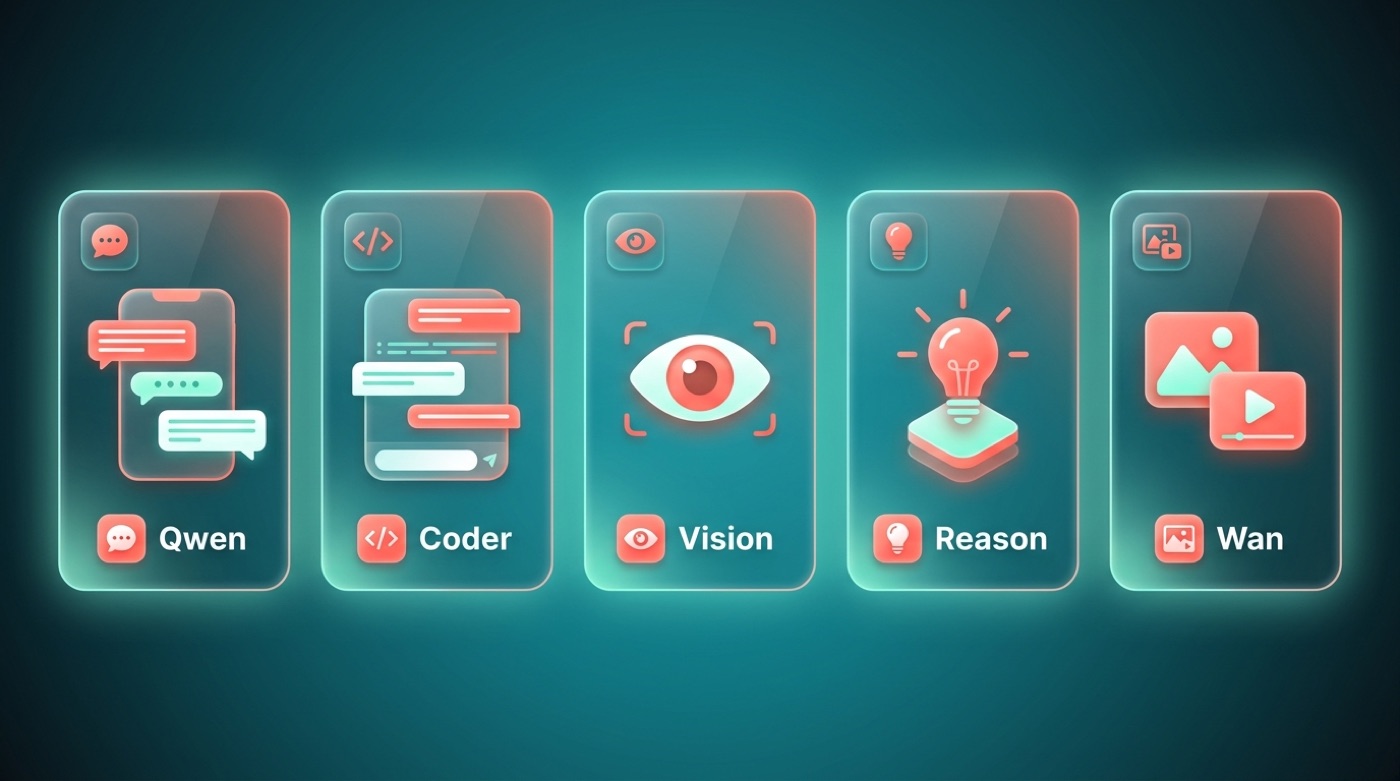
| Model line | What it does (plain English) | Where you find it |
|---|---|---|
| Qwen / Tongyi Qianwen | General chat, writing, summarizing, translating | Qwen Chat, Hugging Face, Alibaba Cloud |
| Qwen-Coder (Qwen2.5-Coder) | Writes and explains code | Hugging Face / GitHub |
| Qwen-VL (Qwen2.5-VL) | “Sees” and describes images | Hugging Face |
| Qwen-Audio | Understands audio and voice | Hugging Face |
| QwQ | Step-by-step reasoning | Hugging Face |
| Wan / Tongyi Wanxiang | Generates images and video | GitHub / ModelScope / Hugging Face (Wan-AI) |
Vision, code, reasoning and voice
- Qwen-VL sees images — describe a photo, read a chart, or answer questions about a screenshot
- Qwen-Coder is tuned specifically for programming tasks, from writing snippets to explaining existing code — code and model releases are published on QwenLM’s GitHub
- QwQ is built to focus on reasoning, working through problems step by step rather than answering in one shot
- Qwen-Audio works with sound and voice rather than just text
Alibaba and the QwenLM team frame each of these as a specialized branch of the same underlying family, built so developers can pick the tool that fits the job instead of forcing one general model to do everything.
Wan — Alibaba’s AI for images and video
What Wan makes
Wan (Tongyi Wanxiang, 通义万相) is Alibaba’s image-and-video generator — it handles text-to-image and text-to-video requests, turning a written description into visual output. Alibaba has open-sourced video-generation models in this line, including versions referred to as Wan2.1 and Wan2.2, published through Alibaba’s Wan-AI presence on GitHub, ModelScope and Hugging Face. Exact release dates and version numbering can shift as Alibaba iterates, so it is worth checking the source repositories directly for the current state. This is a separate product line from the Qwen chat model, even though both fall under the same “Alibaba AI” umbrella.
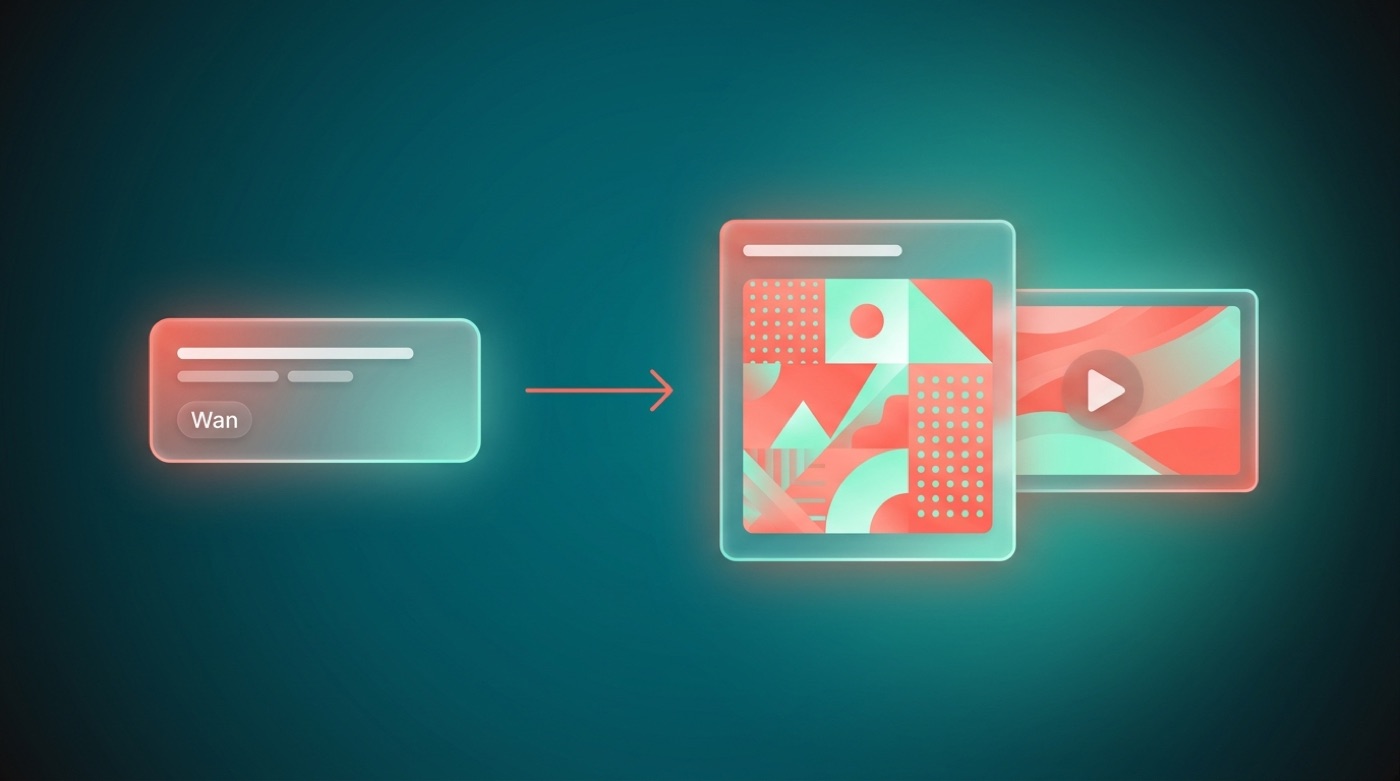
Wan sits next to Qwen rather than inside it — Qwen handles language, Wan handles pixels and motion, and Alibaba positions both as parts of the same broader AI effort out of Alibaba Cloud.
Where and how to use Alibaba AI
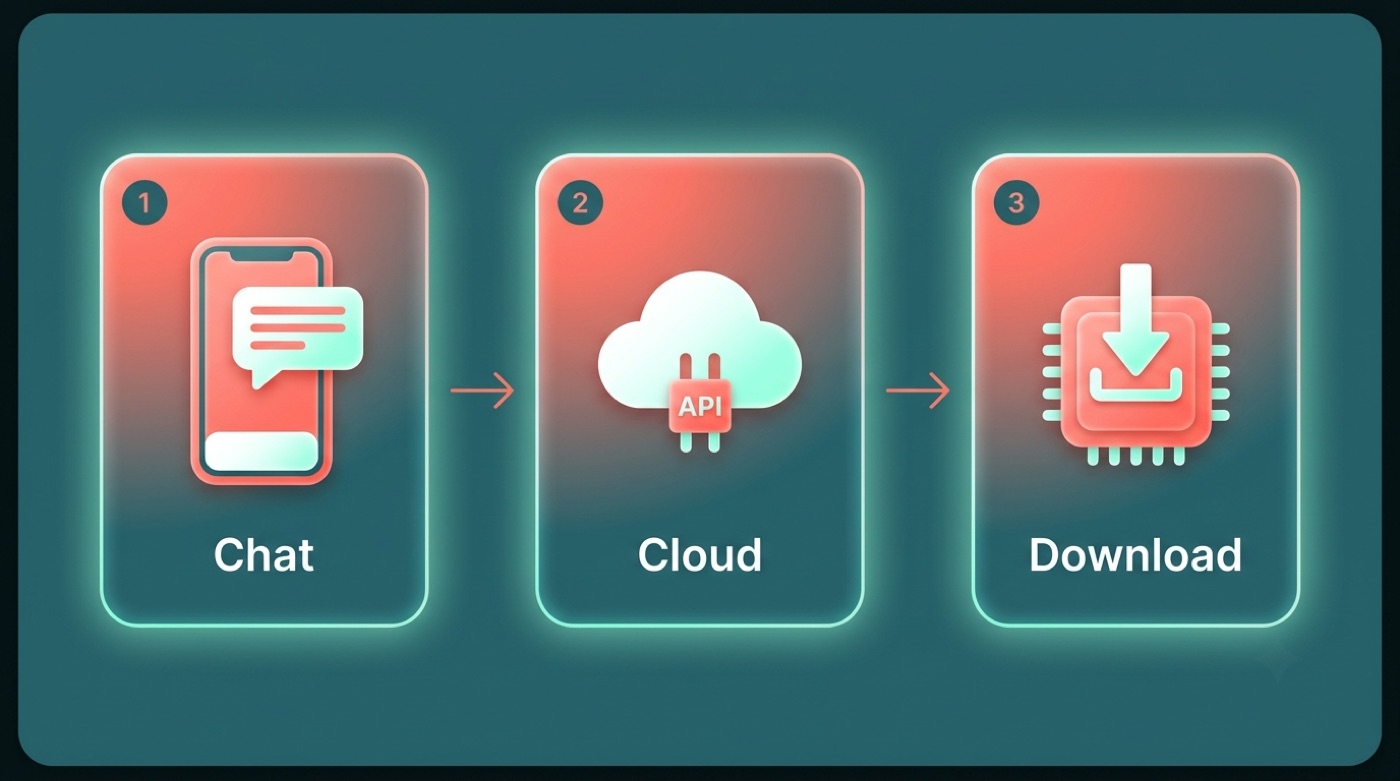
Trying Alibaba’s AI does not require a developer background or an Alibaba shopping account. There are three practical entry points, depending on how deep you want to go.
Three main ways in
- Qwen Chat — the free web app at chat.qwen.ai, the easiest way in for a regular person; no coding required
- Alibaba Cloud (DashScope / Model Studio) — the developer API for building your own apps and products on top of Qwen
- Download the open weights from Hugging Face or ModelScope to run models yourself, on your own hardware
In China, Qwen also powers Alibaba’s Tongyi consumer app, which is a separate front end built on the same underlying models.
For everyday users vs developers
| Audience | Best entry point | What you need |
|---|---|---|
| Curious consumer | Qwen Chat (chat.qwen.ai) | Just a browser and an account |
| Developer | Alibaba Cloud Model Studio / DashScope | An Alibaba Cloud account and an API key |
| Tinkerer / self-hoster | Hugging Face / ModelScope | Your own hardware to run the downloaded model |
Is Alibaba’s AI free? And is it open source?
Free to chat, open to download
- Qwen Chat is free for everyday use — you can ask it questions, get code help, or generate text without paying
- Many Qwen models are released under the Apache 2.0 license, a permissive open-source license that lets developers download, modify and run them for free, including for commercial use
- Some earlier or larger models use a Qwen-specific license instead of Apache 2.0, so it is worth checking each model’s page on Hugging Face or ModelScope before assuming the terms
- Alibaba Cloud’s API (DashScope / Model Studio) is a paid developer service — pricing changes over time, so this guide does not quote a specific number; check Alibaba Cloud’s own pages for current rates
“Open-weight,” in plain English
“Open weight” means the trained model file itself is published — on Hugging Face or ModelScope, for example — so anyone can download it and run it on their own computer or server. That is different from a closed model you can only reach through a company’s website or app. Qwen is one of the most widely adopted open-weight families, and Alibaba frequently highlights strong placements on open-weight leaderboards; exact rankings shift often, so check the leaderboard in question for the current standing rather than treating any single number as fixed.
Alibaba AI vs ChatGPT — how do they compare?
The honest short version
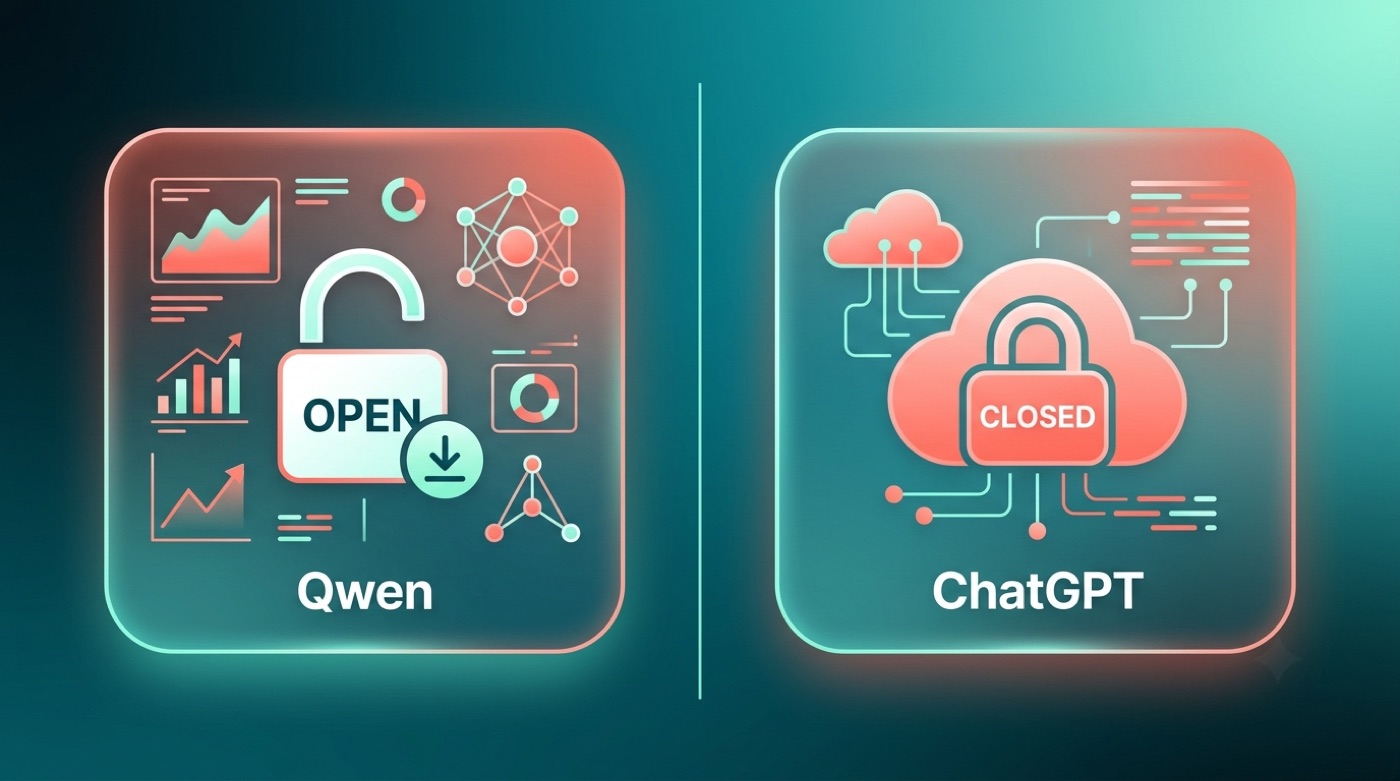
Both Qwen and ChatGPT are capable general-purpose chat assistants that can write, summarize, code and answer questions. The biggest practical difference is not raw capability — it is distribution: many Qwen models are open-weight, meaning you can download and self-host them, while ChatGPT’s top models are closed and reachable only through OpenAI’s own service. Neither point makes one system objectively “better”; they solve different problems for different users.
What each is good for
- Pick Qwen if you want open weights, the option to self-host, or strong multilingual and vision support out of the box
- Pick ChatGPT if you want to stay inside OpenAI’s ecosystem and its existing tools and integrations
- Developers building a product often compare both on the specific task at hand — coding, translation, image understanding — rather than picking one brand outright
- Businesses concerned about data residency or running models on their own infrastructure tend to lean toward the open-weight option
These are preferences, not verdicts — the right pick depends on whether self-hosting, cost, or ecosystem fit matters most for a given project.
FAQ
Unofficial. This site is not affiliated with, endorsed by, or sponsored by Alibaba or the Qwen team.