
Tongyi Qianwen: The Chinese Name Behind Alibaba’s AI (Qwen), Explained
If you’ve seen “Tongyi Qianwen” (通义千问) somewhere and wondered what it is — it’s Alibaba’s ChatGPT-style AI. The straight answer: Tongyi Qianwen is the original Chinese brand name for the AI model family the rest of the world knows as Qwen, built by Alibaba Cloud.
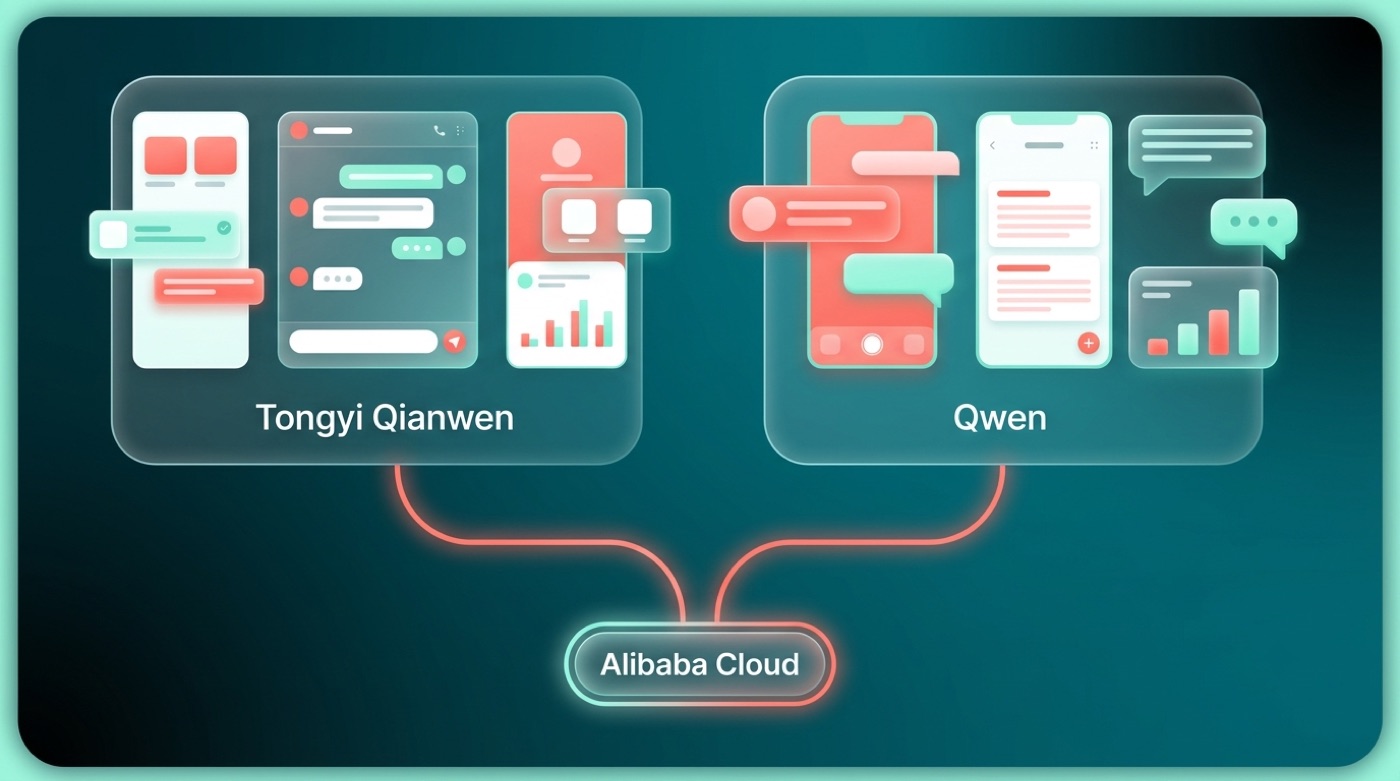
So “Tongyi Qianwen” and “Qwen” are two names for the same thing — one Chinese, one international. This guide walks through the name, who makes it, where to try it, and how it stacks up against ChatGPT, without the jargon.
What is Tongyi Qianwen? (the short answer)
One-line definition
Tongyi Qianwen (通义千问) is a family of large language models made by Alibaba Cloud — an AI assistant you can chat with, ask questions, and get help writing or coding, much like ChatGPT or Gemini. The first Qwen models appeared in 2023.
The fast facts
- What it is: an AI large language model (a chatbot-style assistant).
- Who makes it: Alibaba Cloud, part of Alibaba Group.
- Its other name: Qwen (the international name).
- What you do with it: chat, ask questions, write, translate, code.
Tongyi Qianwen vs Qwen: same AI, two names
Chinese-market branding uses “Tongyi Qianwen” (通义千问), while the shorter international handle “Qwen” shows up across Alibaba’s open-source releases and the global chat app. These are the same underlying models wearing two different names — Alibaba’s Chinese-market brand and the name it uses everywhere else.
The official Qwen repository on GitHub spells this out directly:
The official repo of Qwen (通义千问) chat & pretrained large language model proposed by Alibaba Cloud.
QwenLM/Qwen, GitHub
That single line is the cleanest confirmation available: Qwen and Tongyi Qianwen are one project, described in its own source with both names side by side.
Name-to-place table
| Name you see | Language / market | Where you’ll run into it |
|---|---|---|
| Tongyi Qianwen / 通义千问 | Chinese, China | Tongyi app, Chinese press |
| Qwen | International | Qwen Chat, GitHub, Hugging Face |
| “Alibaba’s AI” / “Alibaba’s ChatGPT” | Casual, everywhere | News coverage, explainer sites like this one |
What does “Tongyi Qianwen” mean?
通义千问 breaks into two parts: 通义 (Tongyi) and 千问 (Qianwen). Roughly, it evokes “understanding meaning” paired with “a thousand questions” — a naming gloss commonly attributed to Alibaba and referenced on Wikipedia’s Qwen entry. Treat that as an approximate feel for the name rather than a precise, word-for-word translation; Chinese product names often lean on wordplay that doesn’t map cleanly to English.
Who builds Tongyi Qianwen?
Alibaba Cloud, the maker
Alibaba Cloud, the cloud-computing arm of Alibaba Group, develops and releases the models. It’s the same division responsible for shipping new Qwen versions, publishing research, and maintaining the official channels where the model actually lives.
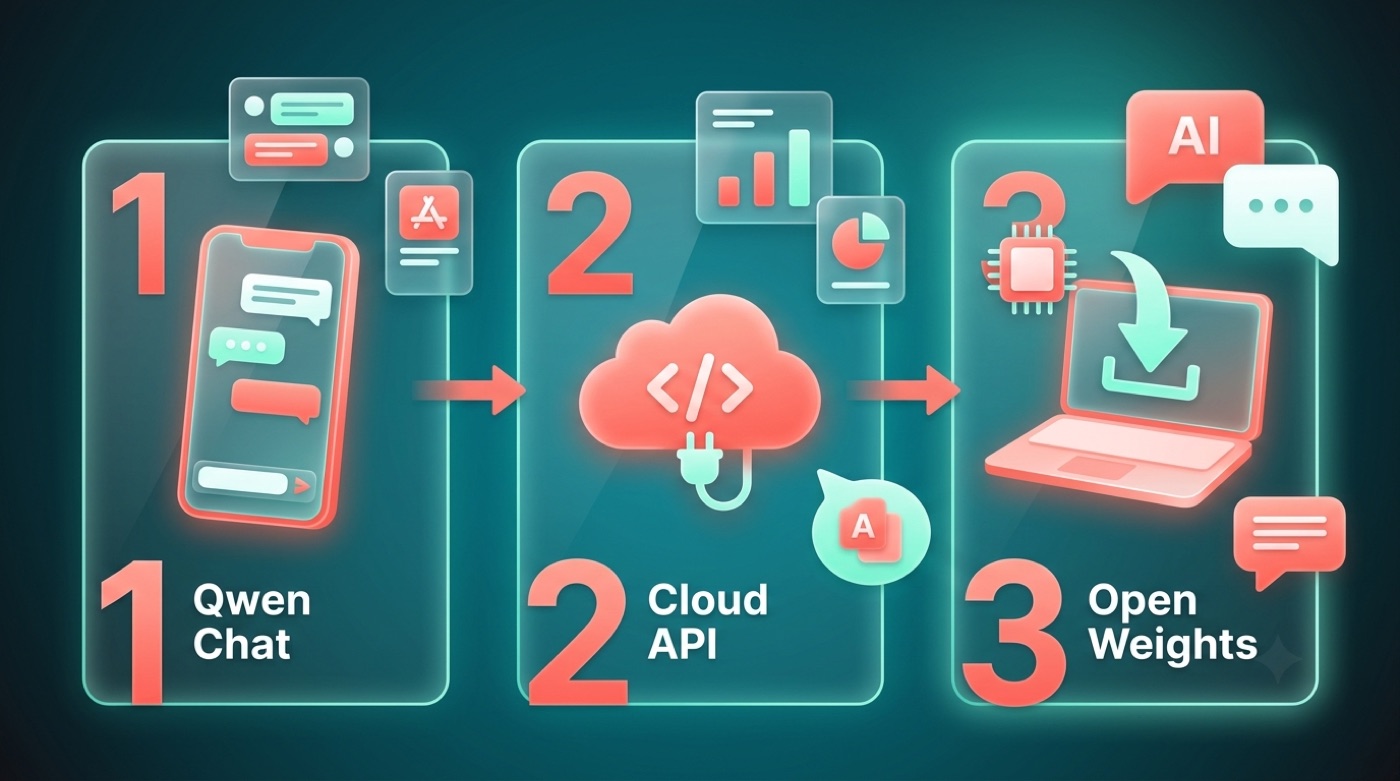
Where the model officially lives
- Chat app: Qwen Chat (qwen.ai) — the free consumer front door.
- Code and announcements: github.com/QwenLM.
- Open weights: huggingface.co/Qwen and Alibaba’s own ModelScope (modelscope.cn).
- Team blog: qwenlm.github.io for release notes and updates straight from the Qwen team.
The Tongyi app in China vs Qwen Chat internationally
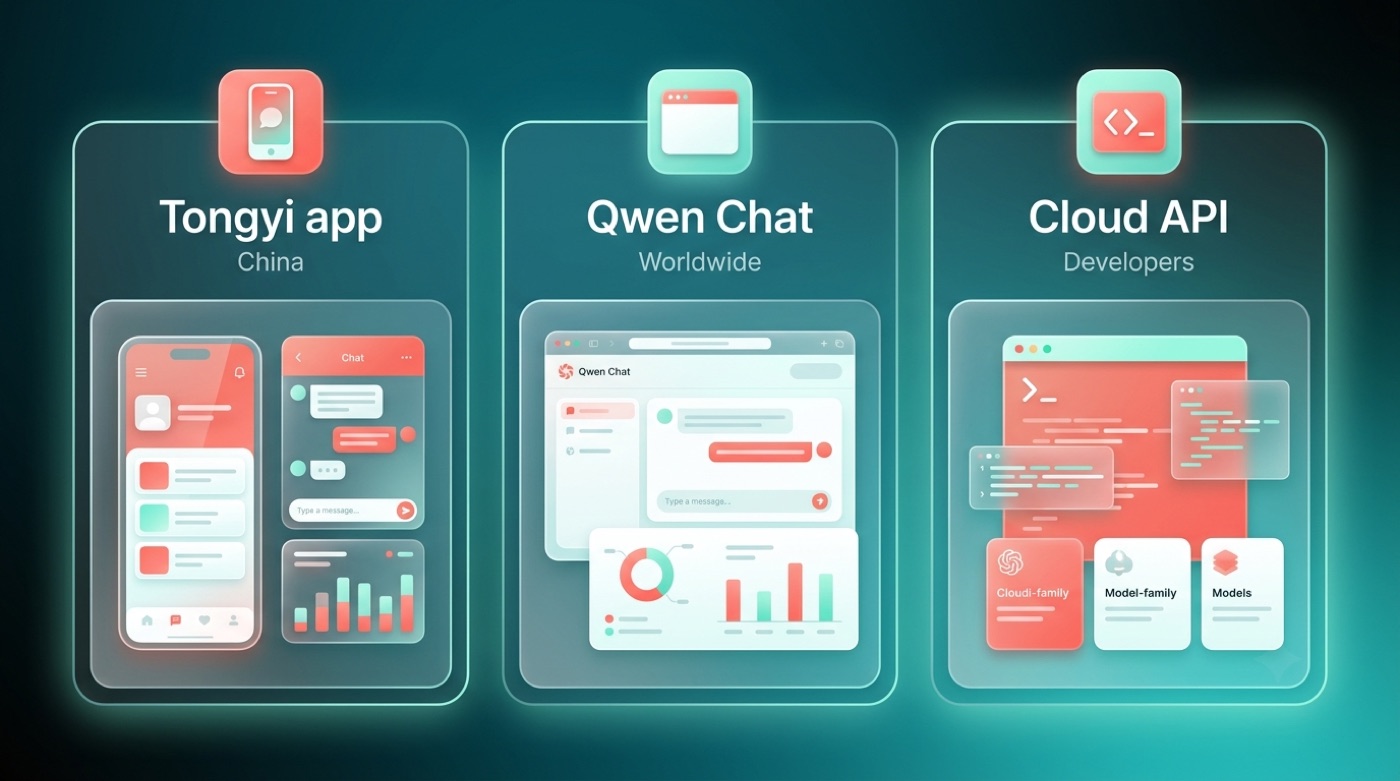
Qwen shows up in more than one place depending on where you are and what you’re trying to do. In China, it powers Alibaba’s Tongyi consumer app. Internationally, the main front door is Qwen Chat (chat.qwen.ai / qwen.ai), Alibaba’s free consumer chat interface. Developers who want to build something on top of it go through Alibaba Cloud’s Model Studio / DashScope API instead of either consumer app.
Where-to-use table
| Route | Who it’s for | What it is |
|---|---|---|
| Tongyi app | Users in China | Alibaba’s Chinese consumer app, powered by Qwen |
| Qwen Chat (qwen.ai) | Everyone, worldwide | Free web chat interface |
| Alibaba Cloud (Model Studio / DashScope) | Developers | Paid API access for building products |
How to try Tongyi Qianwen (Qwen) yourself
Three ways to use it
- Just chat. Open Qwen Chat (qwen.ai) and start typing — it’s free to try, no setup required.
- Build with it. Developers call the model through Alibaba Cloud’s Model Studio / DashScope, billed like any other cloud API.
- Run it yourself. Download open-weight Qwen models from Hugging Face or ModelScope and run them on your own hardware.
Each route fits a different kind of user, so picking the right one matters. Casual users only need the first option; the other two exist for people who want the model embedded in their own workflow or app.
Is Tongyi Qianwen free? Open weights explained
Free, open, or paid?
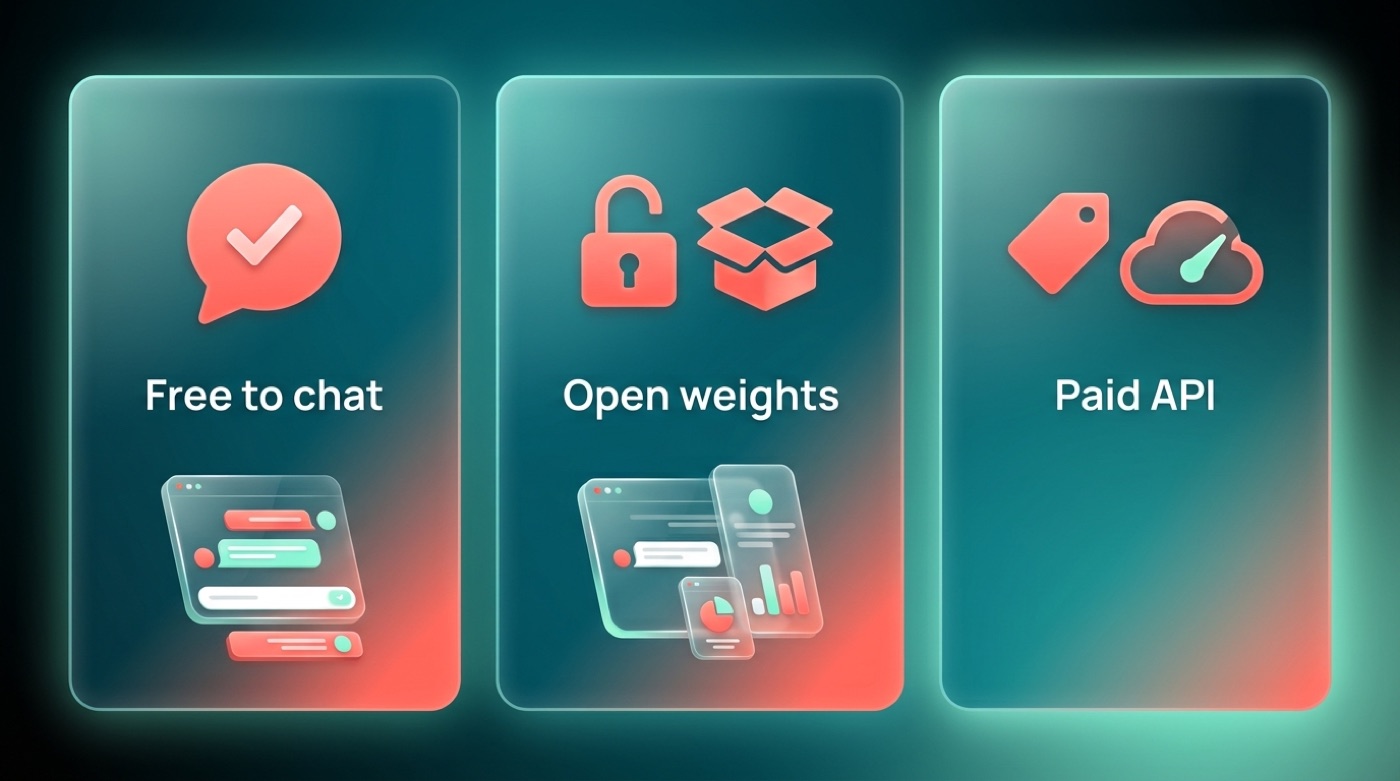
- Free to chat: Qwen Chat, the consumer web app, is free to start.
- Open weights: many Qwen models are released under the Apache 2.0 license — free to download and run yourself; some models carry a Qwen-specific license instead, so it’s worth checking each model’s card before assuming.
- Paid: high-volume usage through Alibaba Cloud’s API is billed like any cloud service.
That mix is a big part of why Qwen gets attention outside China — a genuinely open-weight strategy, not just a free-tier chatbot, is unusual among the largest AI labs.
Tongyi Qianwen (Qwen) vs ChatGPT
Both are LLM-based chat assistants you talk to in plain language, but the differences that matter to a regular user come down to origin and openness. ChatGPT comes from OpenAI, based in the US. Qwen — Tongyi Qianwen — comes from Alibaba, based in China, and takes a notably open-weight approach: many Qwen models can be downloaded and run independently, something ChatGPT doesn’t offer. Alibaba also emphasizes strong multilingual and Chinese-language support, with recent versions claimed to cover 100+ languages according to Alibaba’s own materials.
On raw capability, Qwen models are frequently cited as strong performers among open-weight releases, though exact rankings shift release to release and shouldn’t be taken as fixed. The practical takeaway for most people: pick ChatGPT for a polished closed product, or Qwen/Tongyi Qianwen if open weights, self-hosting, or multilingual strength matter to you.
Quick comparison table
| Qwen / Tongyi Qianwen | ChatGPT | |
|---|---|---|
| Maker | Alibaba Cloud (China) | OpenAI (US) |
| Weights | Many models open-weight (Apache 2.0) | Closed |
| Access | Qwen Chat, API, or self-hosted | Web/app, API |
| Language strength | Strong Chinese + broad multilingual | Broad multilingual |
The wider Tongyi family: Qwen (text) and Wan (images/video)
Qwen = the language brain
Under the Tongyi umbrella, Qwen is the flagship language-model line, and Alibaba has also built specialized versions for narrower jobs: Qwen-Coder for programming tasks, Qwen-VL for vision (images plus text), Qwen-Audio for audio, Qwen-Math for math-heavy reasoning, and QwQ as a dedicated reasoning model. The confirmed generational lineup is Qwen (the original release), Qwen1.5, Qwen2, Qwen2.5, and Qwen3 — each a step up from the last, released and documented through Alibaba’s official channels.
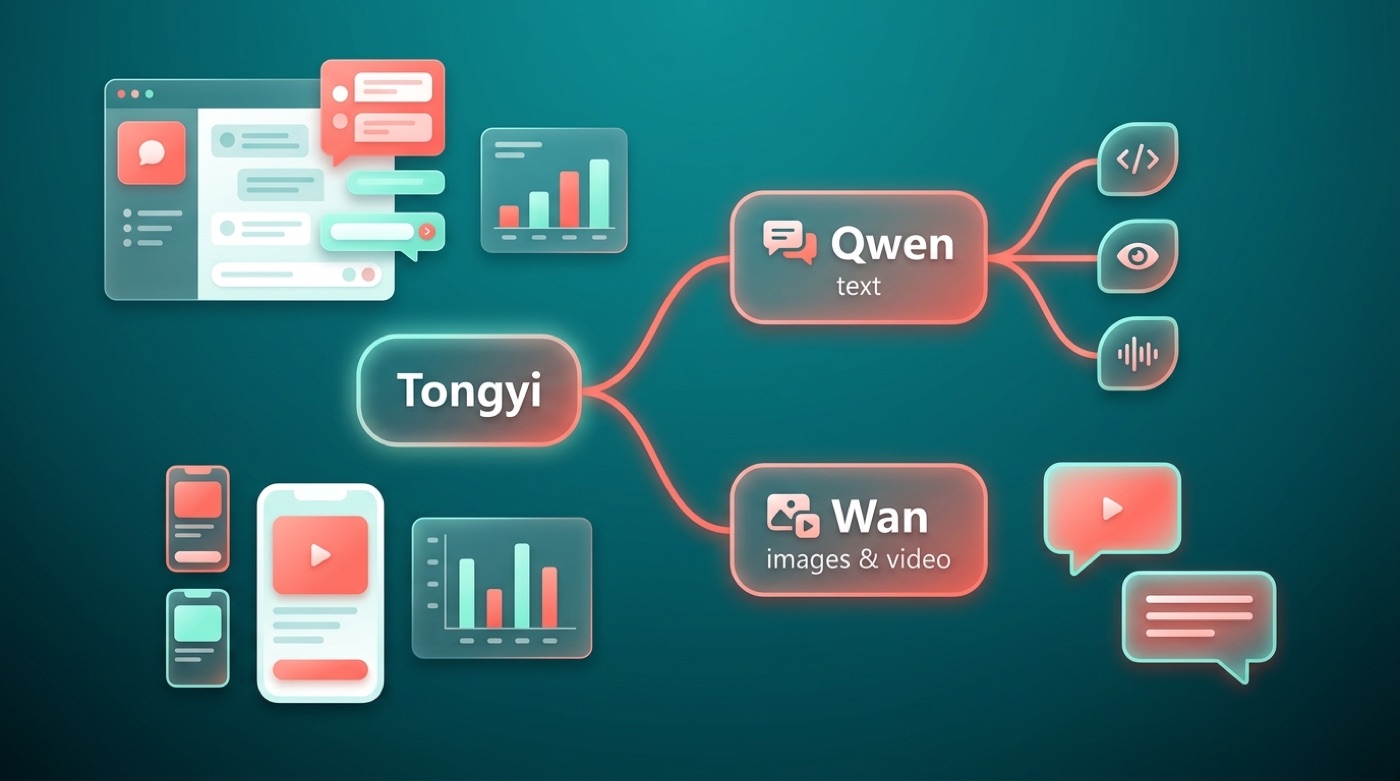
Wan = pictures and video
Wan (通义万相, Tongyi Wanxiang) is Alibaba’s separate image- and video-generation line under the same Tongyi umbrella. Alibaba has released open-source video models under the Wan name on GitHub, ModelScope, and Hugging Face — worth knowing about if Tongyi Qianwen led you here but what you actually needed was image or video generation rather than a text chatbot.
FAQ
Unofficial. This site is not affiliated with, endorsed by, or sponsored by Alibaba or the Qwen team.