
Qwen vs ChatGPT: How Alibaba’s AI Compares (Plain-English Guide)
Both Qwen and ChatGPT are conversational AI you can chat with in plain language, just by typing a question. The big difference is who owns each one and how open it is: Qwen is Alibaba’s AI, built by Alibaba Cloud, and much of it is open-weight — free to use in Qwen Chat and free to download and run yourself. ChatGPT, by contrast, is OpenAI’s product — closed and hosted, available only through OpenAI’s own apps and website.
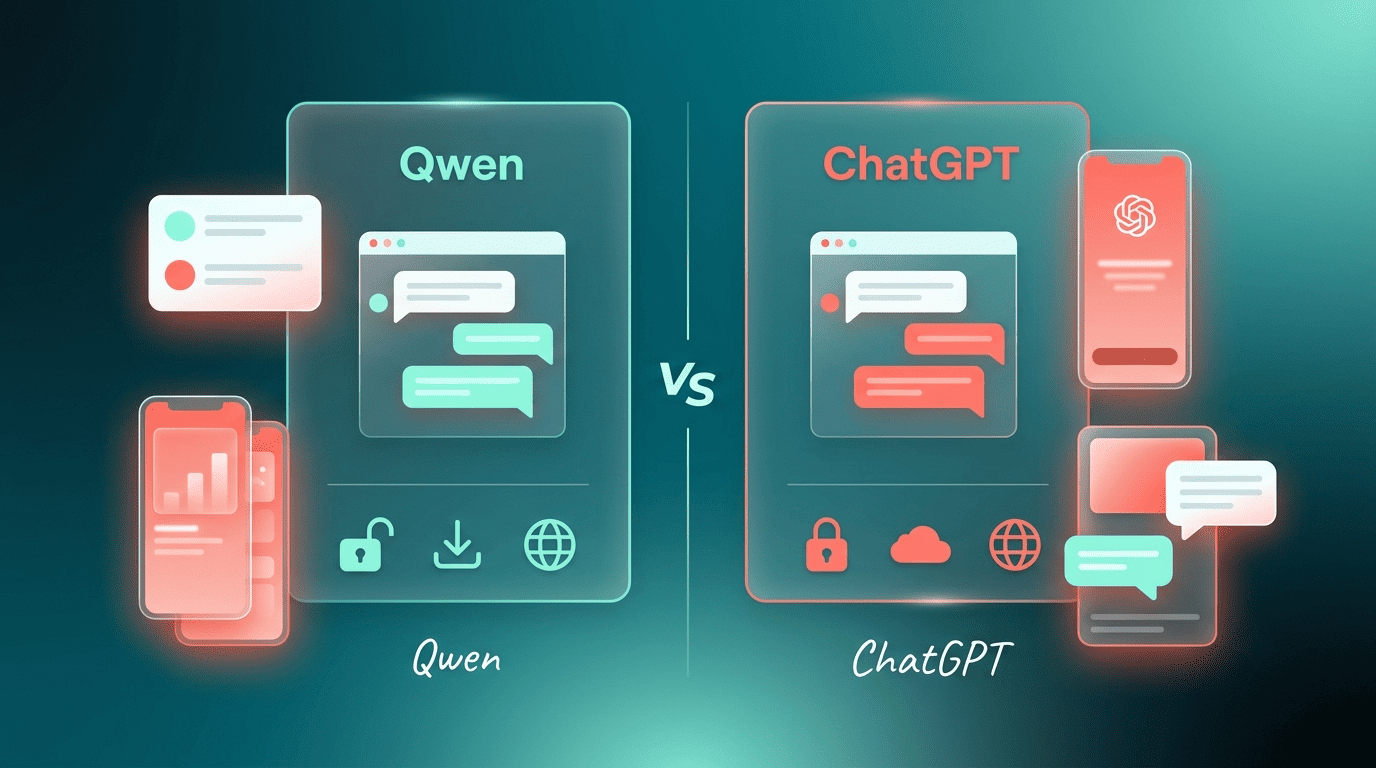
Neither one is simply “better” in every sense. They suit different needs. This guide compares them the way a newcomer would actually care about — who owns each, price and free access, language support, where each one runs, and whether each can understand images — so you can decide which to try first.
Qwen and ChatGPT in one sentence each
Before getting into the details, it helps to know what each product actually is. Both are large language models you talk to through a chat window, but the companies behind them, and what they let you do with the underlying technology, are quite different.
What Qwen is
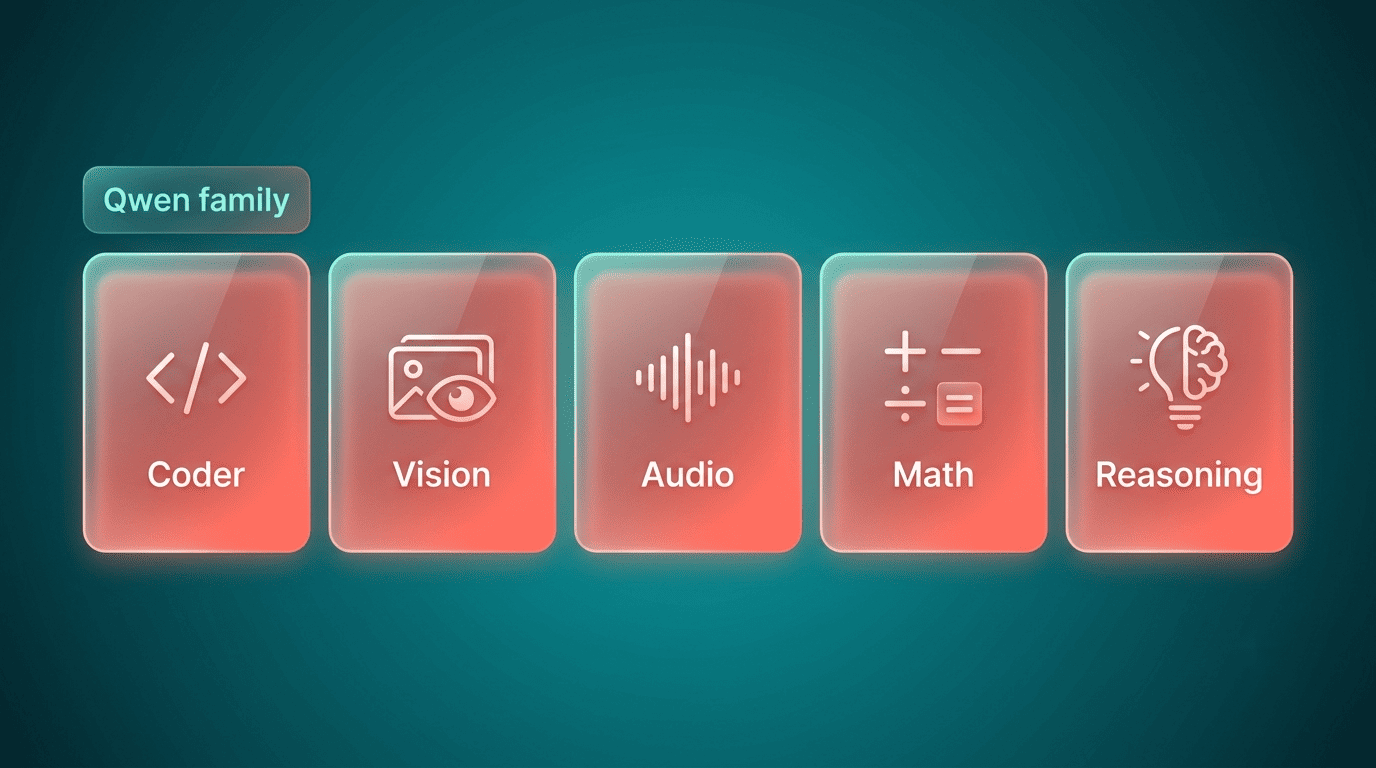
Qwen — also written Tongyi Qianwen — is a family of large language models built by Alibaba Cloud, first released in 2023. It powers Alibaba’s free Qwen Chat, and unusually for a major AI lab, many versions of Qwen can be downloaded and run by anyone. Alibaba positions Qwen as a growing “family” of models rather than one single product: alongside the general-purpose chat models there are specialized lines, including Qwen-Coder for programming tasks, Qwen-VL for understanding images, Qwen-Audio for audio, Qwen-Math for math problems, and a reasoning-focused line called QwQ.
What ChatGPT is
ChatGPT is OpenAI’s hosted AI assistant — the app most people first tried when they think of “AI chat” — now running on OpenAI’s current flagship model, GPT-5.6 Sol. It is closed, or proprietary: you use it through OpenAI’s website and mobile apps, and unlike Qwen, you cannot download the underlying model or run it on your own hardware. Everything happens on OpenAI’s servers.
Qwen is a family of large language models developed by Alibaba Cloud, released as open-weight models so the community can use, study, and build on them.
Qwen Team, Alibaba Cloud
Who owns each: Alibaba vs OpenAI
Qwen comes from Alibaba Cloud, the cloud computing arm of China’s Alibaba Group. ChatGPT comes from OpenAI, a US-based AI company. This ownership shapes almost everything else in this comparison: Alibaba releases open weights as part of a broader cloud and developer-ecosystem strategy, encouraging people to build on Qwen and, eventually, use Alibaba Cloud services. OpenAI, meanwhile, keeps ChatGPT closed and sells access to it as a hosted product.
- Qwen — developed by Alibaba Cloud (part of Alibaba Group), based in China
- ChatGPT — developed by OpenAI, based in the United States
- Alibaba’s approach favors open distribution of model weights alongside its cloud business
- OpenAI’s approach favors a single hosted service you access through its own apps and API
Open-weight vs closed: the core difference
The single biggest technical difference between Qwen and ChatGPT is whether you can actually get your hands on the model itself.
Qwen is open-weight for many of its models. The model files are published so developers and enthusiasts can download them, run them offline or on their own servers, and modify them. Many Qwen models are released under the permissive Apache 2.0 license and published on Hugging Face and ModelScope. Some Qwen models instead use a Qwen-specific license with a few extra conditions, so the exact terms vary from model to model — always worth checking the license on the specific version you want to use.
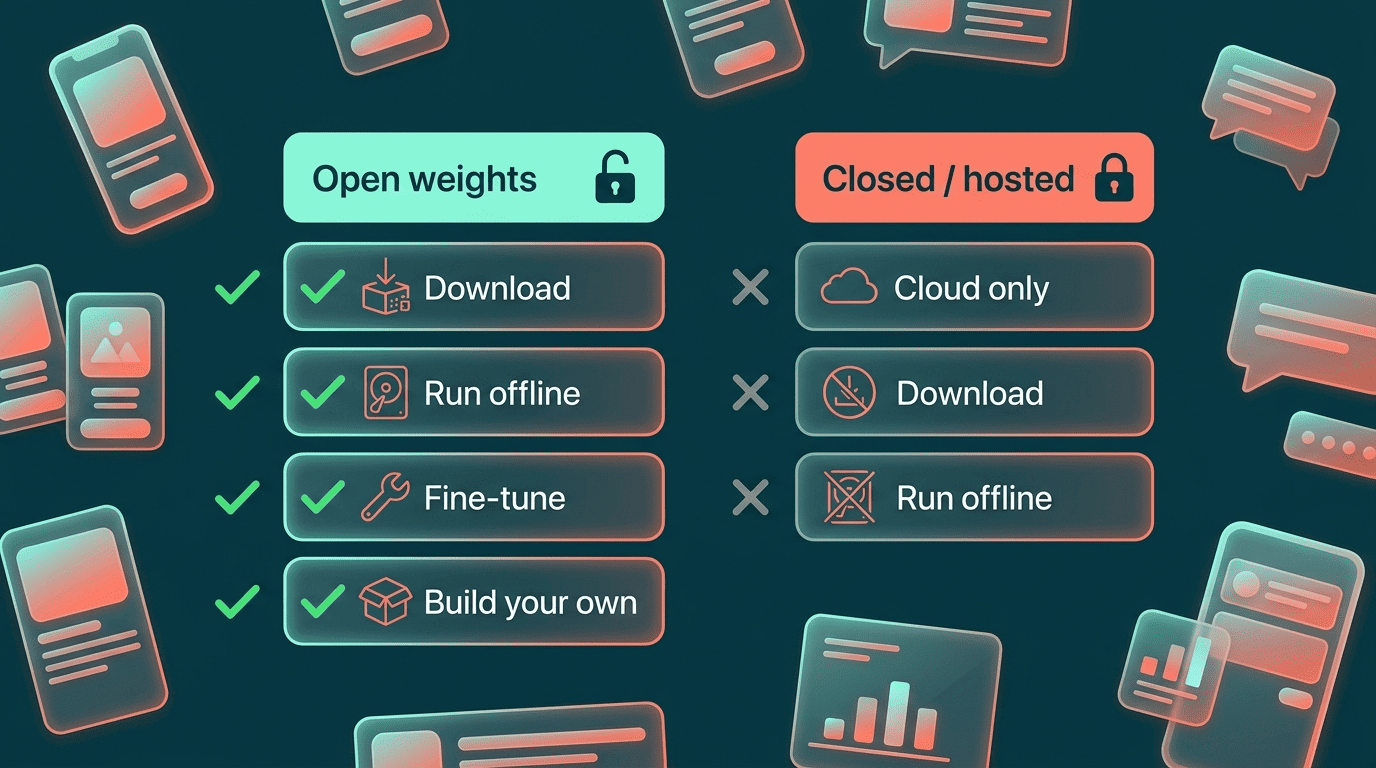
ChatGPT is the opposite. OpenAI does not publish ChatGPT’s weights. There’s no file to download and no way to self-host it — the only way to use it is through OpenAI’s hosted service. The same holds for the other leading closed flagships people compare against Qwen — OpenAI’s GPT-5.6 Sol and Anthropic’s Claude Fable 5 — which run only as hosted services, never as weights you can download.
Because Qwen models are open weights, you can:
- Download the model files yourself, for free, from Hugging Face or ModelScope
- Run Qwen offline or on your own server, with no dependency on Alibaba’s servers
- Inspect, fine-tune, or modify the model for your own use case
- Build a commercial product on top of it, subject to the specific license of the model you chose
With ChatGPT, none of that is available:
- No downloadable model file
- No self-hosting or offline use
- No ability to inspect or modify the underlying model
- Access only through OpenAI’s website, apps, or paid API
Price and free access
Both Qwen and ChatGPT give you a free way in, though the free path looks different for each.
With Qwen, you can chat for free at Qwen Chat, no download required. Because many Qwen models are open-weight, you can also download them and run them for free — the only cost is your own computing power, or you can pay Alibaba Cloud’s DashScope API if you’d rather have Alibaba host the model for you.
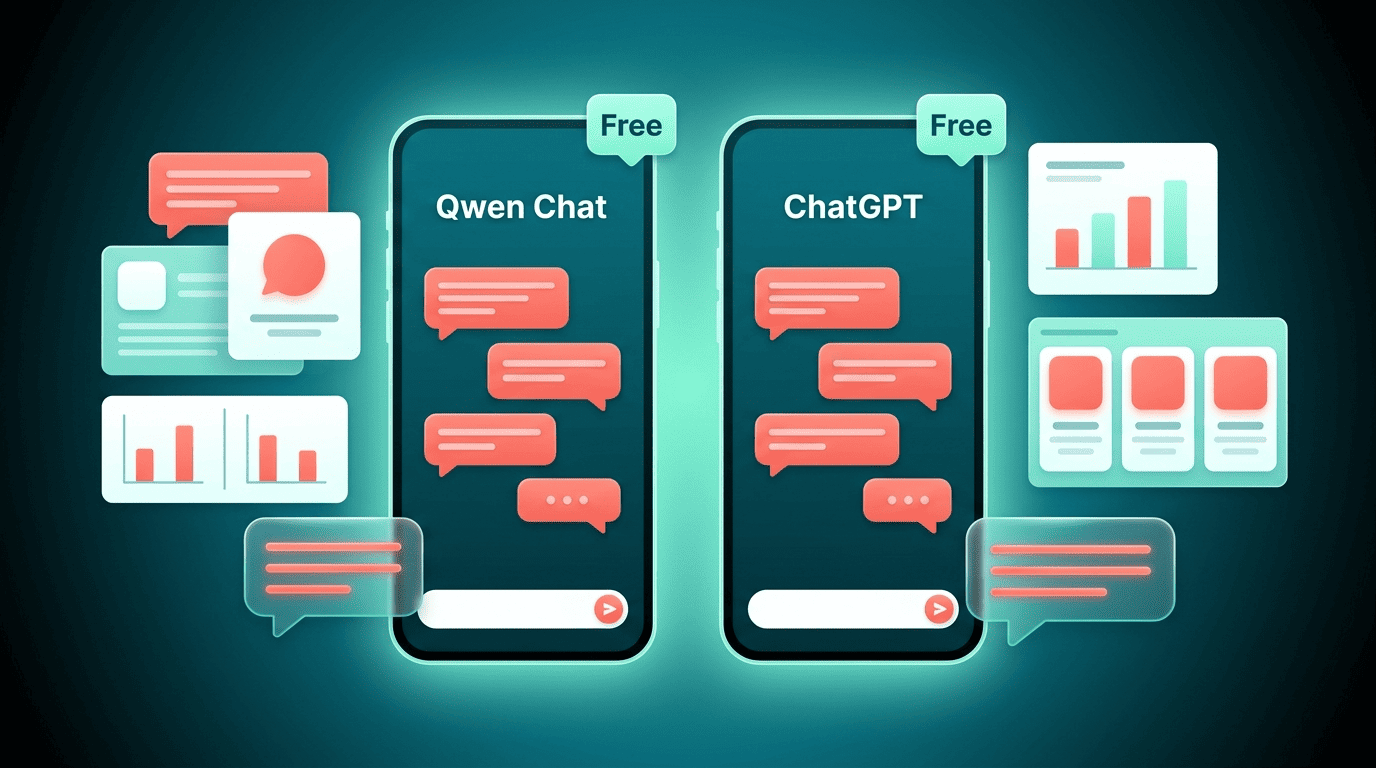
With ChatGPT, OpenAI offers a free tier plus paid subscriptions for higher usage limits and additional features. Exact pricing and plan details change over time and are set by OpenAI, so it’s worth checking OpenAI’s own site for current numbers rather than relying on this guide. The practical takeaway for a newcomer is simple: you can try both Qwen and ChatGPT without paying anything up front.
Languages
Both handle a wide range of languages well beyond English. Alibaba highlights broad multilingual coverage for recent Qwen versions — the company has claimed support for 100+ languages, though that figure comes from Alibaba itself rather than an independent third-party test, so treat it as a vendor claim rather than a verified benchmark. ChatGPT is also strongly multilingual and widely used outside English-speaking countries. If you regularly work in a language other than English, it’s worth testing both Qwen and ChatGPT on your own real prompts, since real-world quality in a given language can vary from the marketing claims.
Where each one runs
This is where the open-weight vs closed difference becomes very practical. Qwen can run in more places than ChatGPT, because you’re not limited to Alibaba’s own servers:
- The Qwen Chat web app, for chatting without any setup
- Alibaba Cloud’s DashScope (Model Studio) API, for developers who want to build an app on top of Qwen
- Your own computer or server, since many Qwen models are open weights you can download and run yourself
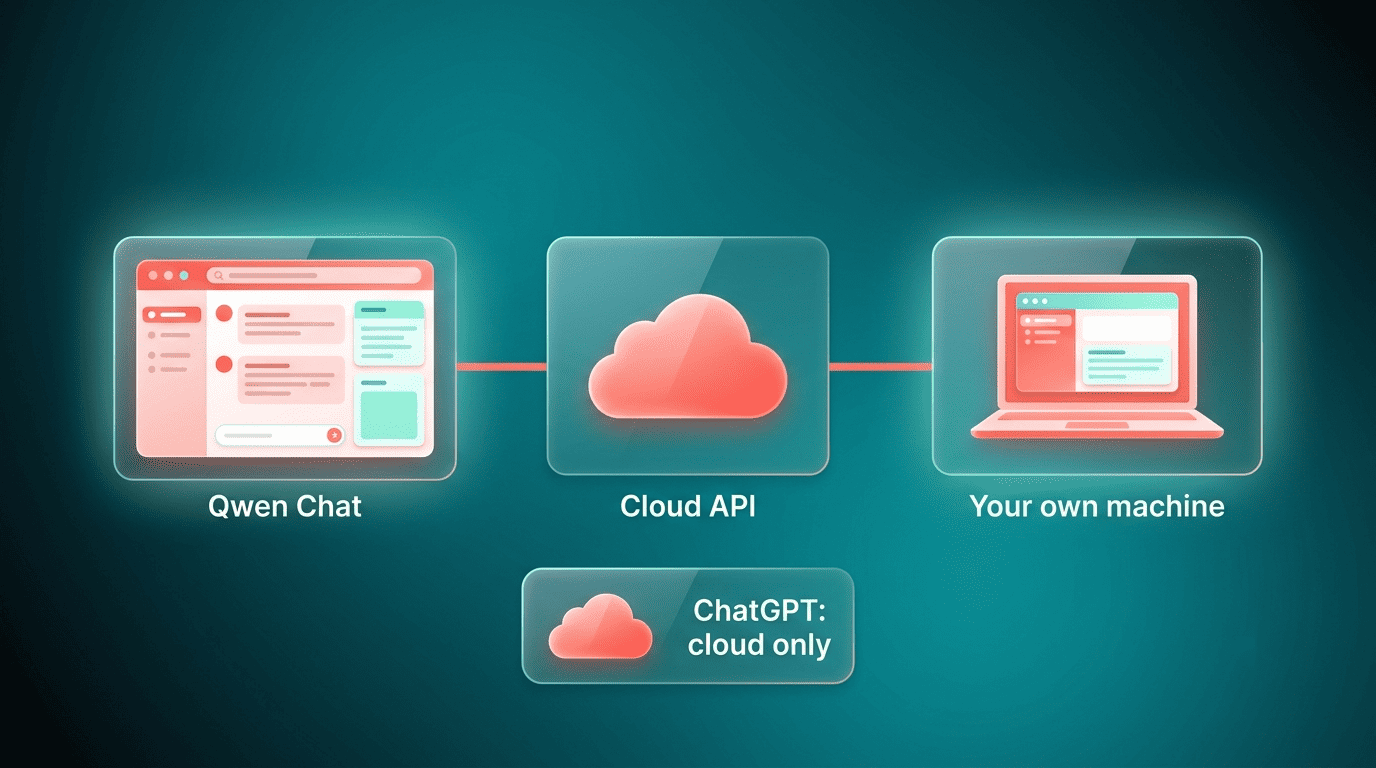
ChatGPT, by comparison, runs only on OpenAI’s cloud, accessed through its web app, mobile apps, or paid API — there’s no option to run it on your own hardware. For many developers and privacy-conscious users, the ability to run Qwen locally, entirely offline, is the single biggest reason to pick an open model over a closed one.
Image understanding
Both Qwen and ChatGPT can look at an image and answer questions about it, not just process text. On the Qwen side, image understanding comes from its dedicated vision-language line — Qwen-VL and its newer version, Qwen2.5-VL — which can describe images, read text within a picture, and answer questions about what’s shown. ChatGPT also accepts image uploads in its hosted app and can discuss what it sees. Neither company publishes independently verified benchmark scores comparing the two on vision tasks, so it’s best to think of this as “both can do it” rather than one being definitively sharper-eyed than the other.
Qwen vs ChatGPT at a glance
| Qwen | ChatGPT | |
|---|---|---|
| Maker | Alibaba Cloud | OpenAI |
| Type | Open-weight (many models) | Closed / hosted |
| Can you download it? | Yes, many models on Hugging Face and ModelScope | No |
| Free way to use | Qwen Chat (free) + free open-weight downloads | Free tier available |
| Languages | Many languages; 100+ claimed by Alibaba | Strongly multilingual |
| Understands images? | Yes, via Qwen-VL / Qwen2.5-VL | Yes, in the hosted app |
| Where it runs | Qwen Chat, Alibaba Cloud API, or your own machine | OpenAI’s cloud only |
Which one should you try?
There’s no single right answer — it depends on what you value more: openness and control, or a familiar, ready-made ecosystem. If you’re not sure, the fastest way to decide is to test both on your own real task:
- Open Qwen Chat and ask it the exact question or task you actually need help with
- Open ChatGPT’s free tier and ask it the same question
- Compare the two answers for your specific use case, not general reputation
- If you’re technical, try downloading a smaller Qwen model from Hugging Face and running it locally
- Note which one you’d reach for again — that’s your real answer
| Try Qwen if… | Try ChatGPT if… |
|---|---|
| You want a model you can download and run yourself | You want the most familiar, ready-made hosted assistant |
| Self-hosting, offline use, or fine-tuning matters to you | You’d rather not manage any infrastructure at all |
| You want to experiment with different open-weight versions | You want one consistent app and a large existing ecosystem |
| Broad language coverage is a priority | You mainly work in English and want simplicity |
- Try Qwen if: you care about open weights, self-hosting, or building your own product on top of a model
- Try ChatGPT if: you want a polished, hosted assistant with no setup
For most newcomers, the best answer is to try both for free — Qwen Chat and ChatGPT’s free tier — on your own tasks, and see which fits the way you actually work.
Unofficial. This site is not affiliated with, endorsed by, or sponsored by Alibaba or the Qwen team.