
Alibaba AI Models: A Friendly, Plain-English Guide to Qwen, Wan and the Whole Family
“Alibaba AI models” almost always means one thing: Qwen, also written Tongyi Qianwen, the family of AI models built by Alibaba Cloud. According to Wikipedia, Qwen is Alibaba’s large language model family, and it comes with a handful of specialized cousins plus Wan, a separate picture-and-video generator. This guide is a plain-English catalogue — what each model does, which ones are free to download, and where to try them.
Alibaba’s AI in one minute: Qwen is the flagship
What “Alibaba AI models” really means
Qwen (通义千问, Tongyi Qianwen) is a family of large language models made by Alibaba Cloud, the cloud computing division of Alibaba Group. The first Qwen models arrived in 2023, and Alibaba has kept releasing new generations ever since. It’s Alibaba’s flagship AI project and its closest answer to ChatGPT. Everything else people mean when they say “Alibaba AI” — code generation, image understanding, audio, pictures, video — hangs off this one family name.
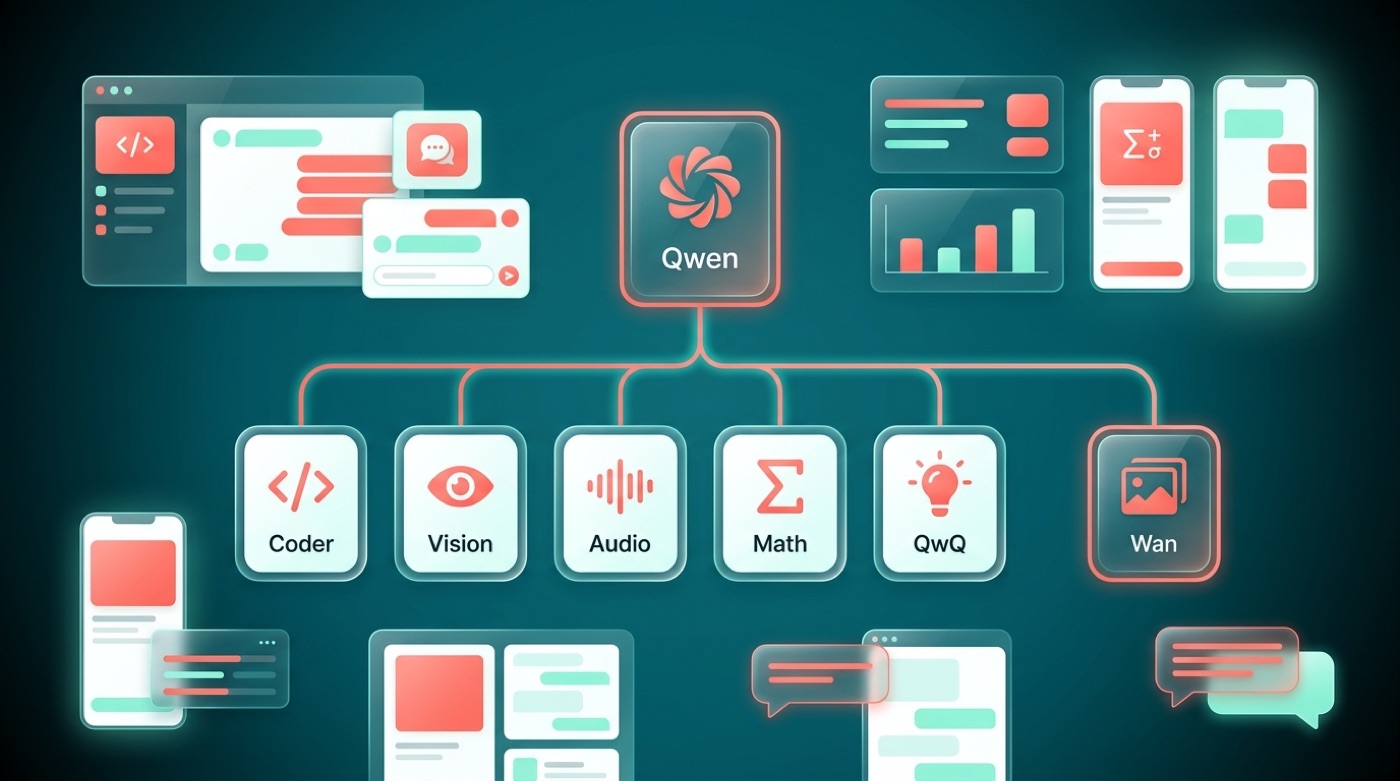
That matters for a newcomer because search results and app names can look scattered at first: Qwen, Tongyi, QwQ, Wan. They’re not separate companies or unrelated products. They’re branches of the same tree, and Alibaba Cloud is the root.
One family, many members
Think of “Qwen” as a family surname rather than a single product. The general-purpose chat model is the headline member everyone meets first. Around it sit several specialists built for narrower jobs, and one entirely separate line — Wan — that doesn’t chat at all, it generates images and video. Grouped together, the specialist branch of the family covers:
- Coding — reading, writing and explaining code
- Vision — “seeing” and describing images
- Audio — understanding spoken sound
- Math — solving and explaining math problems
- Reasoning — working through multi-step logic
No exact model count is claimed here on purpose — Alibaba adds and updates entries in this lineup regularly, so treat any specific number you see elsewhere with caution.
The Qwen family: the core chat and text models
The generations, in order
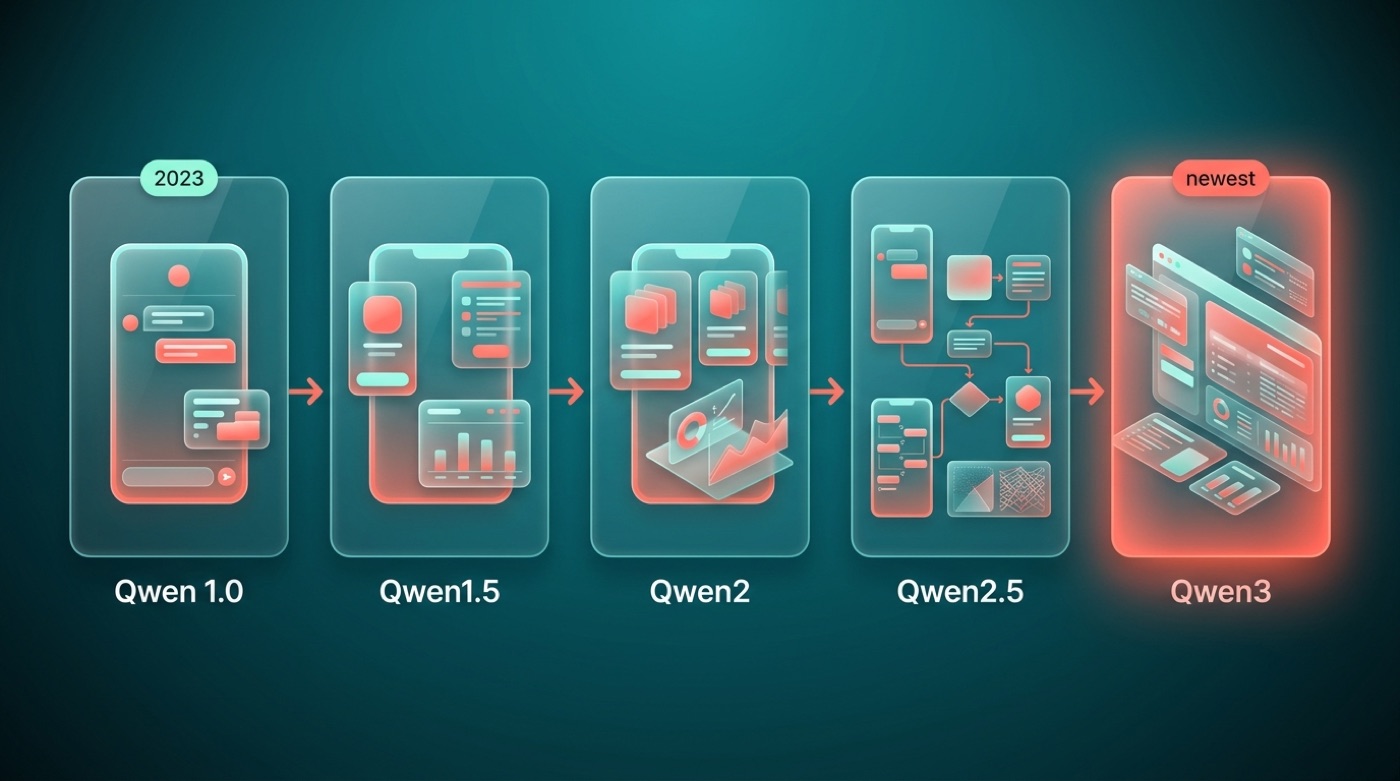
The confirmed generations, oldest to newest, run: Qwen (1.0) → Qwen1.5 → Qwen2 → Qwen2.5 → Qwen3. Each generation is generally described by Alibaba and the QwenLM project as smarter and more multilingual than the one before it. At the time of writing, Qwen3 is the newest confirmed generation — treat anything numbered beyond that as unverified.
| Generation | Roughly what it is |
|---|---|
| Qwen (1.0) | The first release, launched in 2023 |
| Qwen1.5 | An early refresh of the original family |
| Qwen2 | Second full generation |
| Qwen2.5 | Widely used generation, broad size range |
| Qwen3 | Newest confirmed generation |
Sizes: from laptop-friendly to server-grade
Qwen doesn’t ship as one fixed-size model — it comes in many sizes, from small models around 0.5B parameters up to large dense models around 72B, plus mixture-of-experts (MoE) variants that route a prompt through only part of the network at a time. In plain English:
- Small models (roughly 0.5B–3B) — run on a laptop or a modest single GPU
- Mid-size models — a balance of speed and capability for everyday tasks
- Large dense models (up to around 72B) — need a serious multi-GPU setup
- MoE variants — activate only part of the network per prompt, trading some memory for efficiency
Exact benchmark scores and context-window sizes vary by release and are best checked on Alibaba’s own model cards rather than assumed here.
Specialized Qwen models: code, vision, audio, math and reasoning
Beyond the general chat models, Alibaba has trained several Qwen variants for specific jobs. Here’s the quick catalogue:
| Model | What it does, simply |
|---|---|
| Qwen-Coder / Qwen2.5-Coder | Writes and explains code |
| Qwen-VL / Qwen2.5-VL | “Sees” images and answers questions about them |
| Qwen-Audio | Listens to and understands audio |
| Qwen-Math | Tuned specifically for math problems |
| QwQ | Focused on step-by-step reasoning |
Qwen-Coder is the programmer’s helper. It’s a version of Qwen tuned to read, write and explain code rather than just chat. Alibaba and the QwenLM project describe it as competitive on coding benchmarks, though exact scores shift with every release, so it’s worth checking the current model card rather than quoting a fixed number.
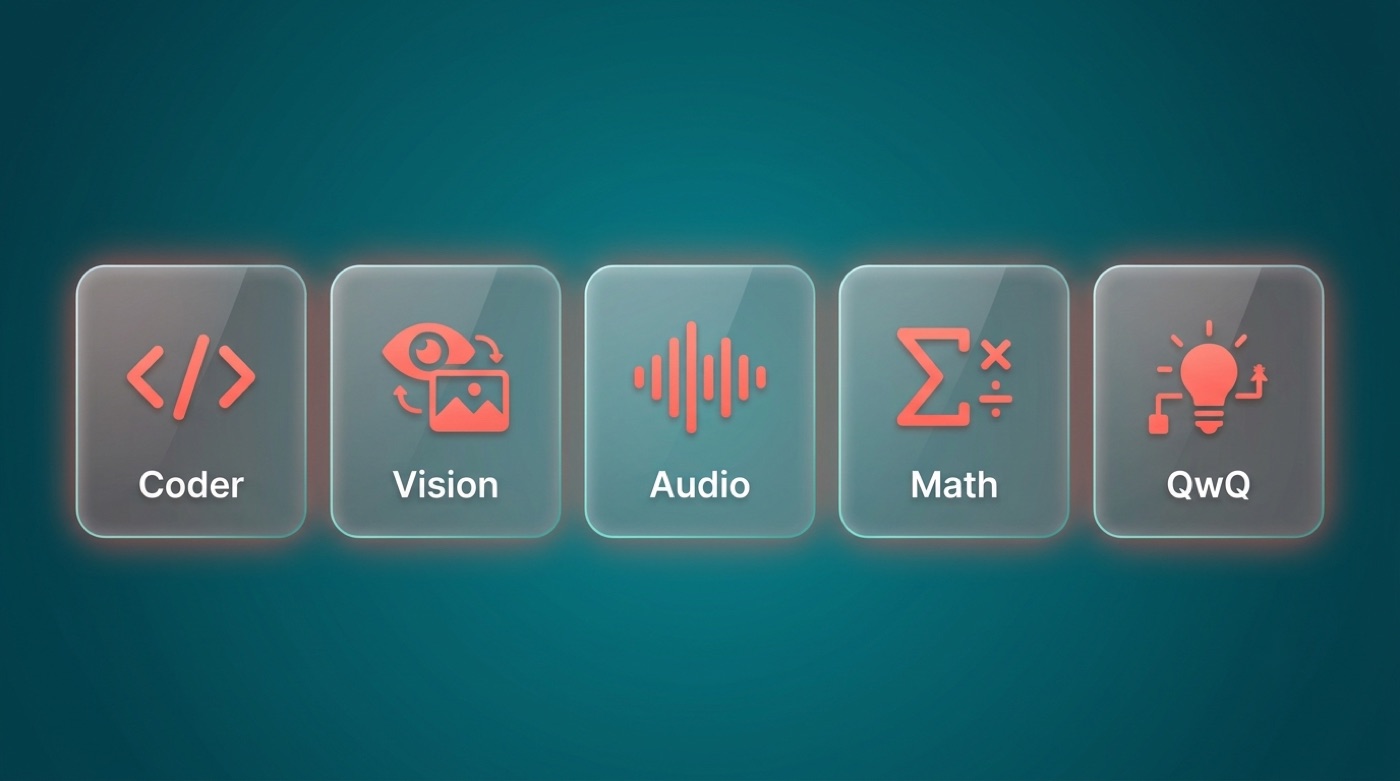
Qwen-VL is the model that can “see.” VL stands for vision-language: you hand it an image — a chart, a screenshot, a photo — along with a text question, and it answers about the picture. This is what lets Alibaba’s AI describe or reason over visual content instead of text alone.
Qwen-Audio, Qwen-Math and QwQ round out the specialist lineup. Qwen-Audio takes sound and speech as input rather than only text. Qwen-Math is tuned specifically for solving and explaining math problems. QwQ is a reasoning-focused model built to “think” through a problem step by step before answering, rather than jumping straight to a response.
Wan (Tongyi Wanxiang): Alibaba’s image and video generator
Wan is a different kind of product from the Qwen chat models — it doesn’t hold a conversation, it generates images and video from a text description. Its Chinese name is Tongyi Wanxiang (通义万相), and the “Wan” name is what most English-language sources use for short.
Alibaba has open-sourced video-generation models in the Wan line, including releases known as Wan2.1 and Wan2.2, published on GitHub, ModelScope and Hugging Face under the “Wan-AI” organization. Exact version numbers and release dates change as Alibaba ships updates, so treat “recent Wan releases” as the safer framing rather than pinning down one specific date. If you’re picturing an AI that only answers questions in a chat window, Wan is the part of the family that breaks that mold — its output is a picture or a video clip, not a paragraph.
Which Alibaba models are open-weight (free to download)?
Open weights, explained simply
“Open-weight” means Alibaba publishes the trained model files themselves, so anyone can download and run them — often for free, on your own hardware. Many Qwen models are released under the Apache 2.0 license, a permissive open-source license that allows free commercial and personal use. Some earlier or larger models instead carry a Qwen-specific license with different terms, so it pays to check each model’s individual card rather than assuming every release is licensed the same way.
Licensed under the Apache License, Version 2.0 (the “License”); you may not use this file except in compliance with the License.
Qwen model cards, Hugging Face
That’s the standard Apache 2.0 header text that appears on the Qwen model cards using this license — it’s the legal backbone that lets developers download, modify and redeploy those particular Qwen models without asking permission first.
Where the open weights live
The open releases aren’t scattered randomly — they cluster around a small set of official homes:
- Hugging Face — huggingface.co/Qwen, for downloading model weights directly
- ModelScope — modelscope.cn, Alibaba’s own model-hosting platform
- GitHub — github.com/QwenLM, for code, tools and release announcements
- The QwenLM blog — qwenlm.github.io, for write-ups behind each release
Wan’s open models sit in a related but separate spot: the “Wan-AI” organization on Hugging Face, rather than under the Qwen name itself.
Where to find and try Alibaba’s AI
However you like to work, there’s an entry point that fits:
- Chat in a browser — Qwen Chat at chat.qwen.ai, no install needed
- Use the consumer app — Tongyi, inside China
- Call it programmatically — Alibaba Cloud DashScope / Model Studio API
- Run it yourself — download open weights from Hugging Face or ModelScope
For everyday users
The simplest entry point is Qwen Chat, a free web app at chat.qwen.ai (also reachable at qwen.ai) — no install, no setup, just point and type. Inside China, Qwen also powers Alibaba’s consumer-facing Tongyi app.
For developers
Developers who want to call Qwen models programmatically use Alibaba Cloud’s DashScope, marketed as Model Studio, which exposes Qwen models through an API. The alternative is downloading the open weights from Hugging Face or ModelScope and running them on your own infrastructure. Roughly, trying Alibaba’s AI for the first time looks like this:
- Decide whether you want a quick chat or programmatic access.
- For a quick chat, open chat.qwen.ai in a browser and start typing.
- For programmatic access, sign up for Alibaba Cloud and open Model Studio.
- Generate an API key from the Model Studio console.
- Alternatively, browse huggingface.co/Qwen or modelscope.cn for an open-weight model to download.
- Check that specific model’s license card before deploying it commercially.
Alibaba’s AI vs ChatGPT, at a glance
Both Qwen and ChatGPT are general-purpose chat AIs that a newcomer can open in a browser and start talking to, so the surface-level experience feels similar. The headline difference is underneath: ChatGPT, built by OpenAI, is closed and hosted — you use it through OpenAI’s own app or API, full stop. Much of the Qwen family, by contrast, is open-weight, meaning you can download the model itself and run it wherever you like.
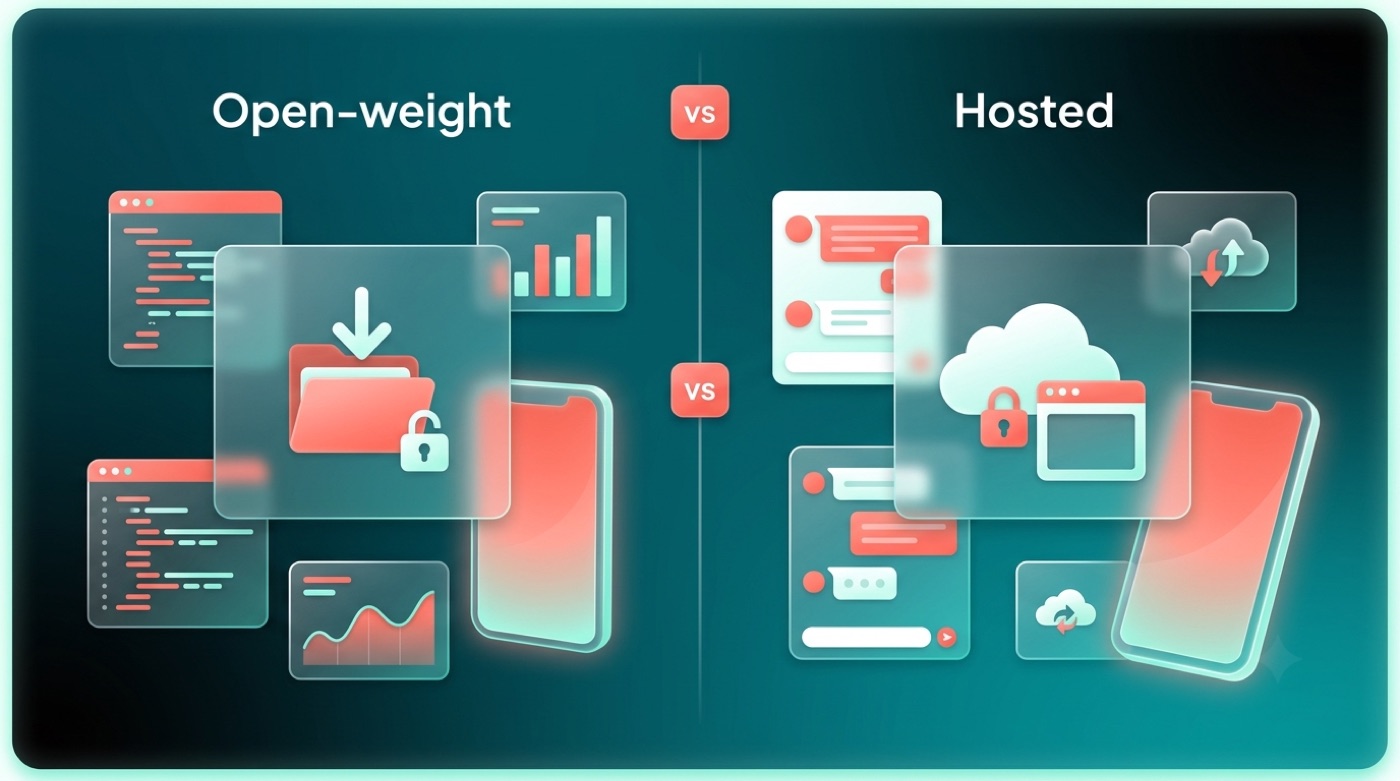
Qwen also leans heavily into multilingual support — Alibaba has claimed support for over 100 languages in recent versions, though exact figures vary by release and should be attributed to Alibaba’s own documentation rather than treated as fixed. Qwen is widely described as one of the most adopted open-weight model families, and it frequently ranks near the top of open-weight leaderboards, though which leaderboard and which exact rank shifts release to release — so it’s worth checking a current leaderboard directly rather than quoting an old number. For a newcomer choosing between the two, the practical question is less “which is smarter” and more “do I want a hosted service or a model I can run myself.”
FAQ
Unofficial. This site is not affiliated with, endorsed by, or sponsored by Alibaba or the Qwen team.